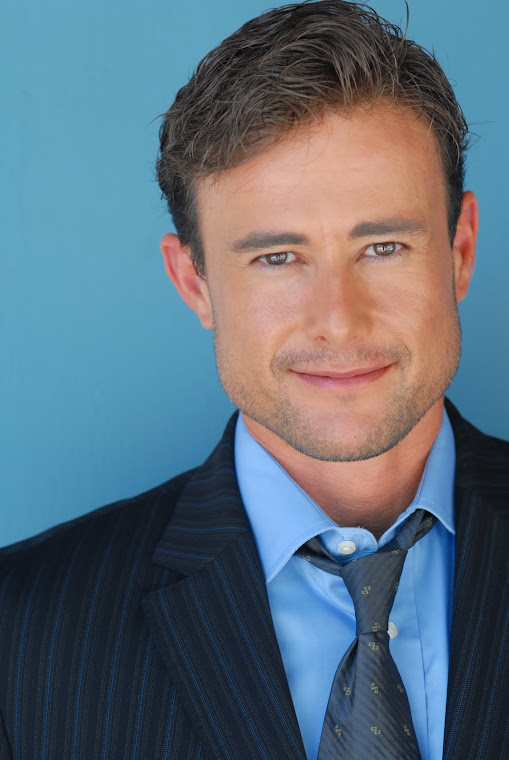
Steven Fales

Steven Fales
Steven Fales -- Actor/Writer/Producer

Thursday, July 17, 2014

Fathers in Crisis


Steven Fales with "Buddy" and "Gee-Gee" six-months before the custody battle in "Prodigal Dad".


“I never wanted to write this book. However, to live inside the divorce matrix, to be engaged in that battle, ultimately means to be poised to tell your story, to make your point, to argue your side at a moment’s notice. It’s a fire that is constantly burning.”
--Alec Baldwin, A Promise to Ourselves: A Journey Through Fatherhood and Divorce


This blog entry is adapted from a recent book proposal and is still a work in progress.

Now more than ever, fathers have become an endangered species. This book is dedicated to all prodigal parents—and all estranged or alienated children. It seems that in the midst of the well-documented and publicized masculinity crisis "Iron Johns" are still needed as dads but we are increasingly up against all odds. Some of our problems are of our own making and some are most definitely from society--and a feminist movement run riot. It’s an uphill climb for dads. Some just give up. I did not. I still have not. That is why I wrote the Mormon Boy Trilogy. That is why I am writing my new memoir, Oxy-Mormon Memoirs.
Part Three in Mormon Boy Trilogy is my solo play Prodigal Dad. The Richmond-Times Dispatch recently reviewed, "His legal battle to retain his rights as a father is a human rights issue, not a gay issue, and struck a chord with many in the audience.”     

Of all the things I’ve been called and all the things I am, what I treasure the most is being a father. Like her or not, in the words of Dr. Laura, "I am my kids' dad." The challenges, sorrows and growth opportunities for me are unparalleled; the blessings and moments of joy are unequaled. I cherish my Fisher Price plastic memories—heaven on earth. My kids’ teenage talent, angst, energy, wonder and rebellion rejuvenates (and exasperates) my soul. 

I am pleased and astonished at the plethora of films today dealing with fathers being reunited with their children. Stories of flawed but good underdog dads who go to any lengths to be in their children’s lives are told in the recent Oscar-nominated Flight, Inception, Biutiful—even Finding Nemo! I was recently blown away that in the bustle of American Hustle, it was a father that refuses to abandon his adopted son--no matter what deals or romances come his way--that anchor the story. It the end, a father and son has triumphed. There are also recent father/son films At Any Price and Starbuck. The award-winning novel Diamond Dogs by Alan Watt is a stunning example of a complex father/son relationship. The Prodigal Father (Mark Bryan) is a great guide for all outcast dads. There are sons, too, who search for their fathers like President Barack Obama’s Dreams from my Father (Three Rivers Press/Random House, 2004). Aren’t we all yearning for our own Mufasa in The Lion King or cheering on our temporarily side-lined dads until they re-claim their super hero capes as in The Incredibles? After decades of Return of the Mother (Andrew Harvey), we are at a new renaissance of fathers. We are Saving Mr. Banks. Look closely at Mary Poppins, and it is the story of a father’s transformation. Life of Pi kicks in when a father teaches a difficult, powerful lesson about a carnivorous tiger’s true nature to his son. This was a lesson his vegetarian mother wasn't capable of teaching. As kids today are in pain and fathers’ hearts are broken, aching families need these stories. Dads are neither disposable or expendable or replaceable.

My work own work challenges and condemns the archaic “seminal” guidebooks on rigid gender roles in Man of Steel and Velvet and Fascinating Womanhood by 1960s husband/wife team Aubrey and Helen Andelin. (I still have these books my still sexist, chauvinistic father gave me to read as a teenager in his best attempt to mold me.) We can never go back to that world of inequality. At the same time I wistfully long for a return to the best of that simplicity. Parents were there. Today parents are not always there full-time. However, we cannot, in the twenty-first century think in Victorian terms--that it is always in the best interest of the children to entrust custody exclusively to mothers. Mommies cannot trump daddies at the expense of our children. Mothers may often be lauded as heroic "single moms", but they never will be only parents even if they try to spin their stories to their advantage.
Crossing gender and culture lines I also relate to the frustrations and failures in Amy Chua’s modern-day parenting lament Batttle Hymn of the Tiger Mother. Outdated traditional Chinese family mores mirror my own and my sub-culture’s dilemmas and generation gaps. The Mormon-world view has flaws, like any antiquated mind-set.

When I was formally excommunicated from the Church of Jesus Christ of Latter-day Saints I lost my patriarchal balls in that sub-culture. All “worthy” males are expected to hold the priesthood in Mormonism. This priesthood is given to you, not by a non-related bishop, but by your layman father who received it from his father. Your father baptizes and confirms you. Your father gives you blessings to heal you when you are sick. In some cases, a father can even officiate marrying his own son and daughter-in-law in the temple, as if to engrain in you that if you get divorced you are divorcing your dad. The priesthood is synonymous with fatherhood in Mormondom. Your dad is your Mormon priest! “Where God is a straight male, the straight male is God.”
I wasn’t supposedly straight enough. To top it off, after graduate school, I stopped believing in and denounced “golden plates.” I failed the macho Mormon test—twice. I became an enemy to the unofficial church of the state of Utah. I became a bastard on the Right in the reddest state in the Union.

When I was stripped of my priesthoods, I ceased to be a viable father even in my own family’s eyes. This priesthood vacuum is palpable with huge cultural, familial and personal ramifications. Once favored and popular (the hope of Generation X) I became padre non grata. The oldest of six, my rightful place as the firstborn son was literally given to my younger brother—the new executor of my father’s estate. Suddenly struck "sodomite" I became (in a psychological twist of nachträglichkeit, après coup or “afterwardsness”) a pedophile. Uninvited (barred) from weddings and reunions, my adoring nieces and nephews seemed to vanish from my presence, too., as I was banished. I started to buy into the mind games and started to distrust and doubt everything about myself. Was I now as untouchably wicked as they thought? Was I now unfit and incapable of fathering? Was I no longer even a man? Not considered a proper stallion, but worse than a mare--a guelding? (Women are second-class citizens in Mormondom. Gays come in at a distant third.) Cornered and outnumbered, I begrudgingly surrendered my very Mormon-at-the-time ex-wife, Emily, sole custody during our quickie divorce—the greatest mistake of my life. I didn't think I had a chance to stand up for myself and I had no funds as I just handed the house, the cars, and kids. I go into great detail about this in my solo plays. A self-loathing death wish set in and the self-destruction started.

Here’s an example of how invisible I would always be. When you die in Mormondom you are buried in elaborate temple robes that only temple-worthy Mormons know about. When my father dies I will literally not be allowed to help dress and bury my father. It is forbidden. I cannot even bury my dead. As my mom's bishop brother, one of my hero uncles, told her, "Steven's being gay is worse than a death." Over and over again, if Emily and I were in the same room with my family after the divorce, they seemed to only look and talk to her. As the non-custodial parent, I was invisible. When you are not legal on paper, you are extinct in reality. I had been exterminated as a dad.

The dark side of Mormonism is that the Church is like a virus that attaches itself to the nucleus of the family. When a member strays the family (now controlled by the Church) kicks in and warns the once cherished son but now dangerous foreign object, “If you don’t stop being gay (and effeminate!) and repent and come back to Mormonism in full-fellowship and blind belief, we will help God make your life more unbearable than you can possibly imagine!” The Church needs willing families to survive. “God may forgive, but the Church’s forgiveness is harder to attain!” Excommunication is supposedly a sacred act of kindness toward the sinner—a “Court of Love” as they call it. Its beauty is designed to help one return to the fold. I wasn’t feeling it. A spiritual experience during my "Court of Love" assured me that this was hogwash. However, being excommunicated for "the crime of homosexuality" left me with despair and anger that I turned inward.
Every kind of emotional and financial embargo was placed on me. My artistic ambitions were also sanctioned to thwart me from writing. It’s not what I would write. It’s that I would write anything. My story was all I had. I knew I would tell it someday. That time has come.
Pitifully desperate and miserably grateful for any crumbs from that once warm proverbial loaf of family bread that fell from their patriarchal table I was spiritually and emotionally starving. Psychologically fragmented it’s no wonder to me now (especially given my genes) that I eventually cracked on a crack pipe full of crystal meth. With no place to call home I was lost as I just tried to survive--and began my gay adolescence funded by escorting. I rationalized selling my body because I would not be a dead-beat dad like Emily's dad. I would pay child support and lavish my kids with gifts and vacations. This I did living a double life that was killing me. Confessions of a Mormon Boy details my nine-month sex-work experiment and how I got out!  Now over thirteen years clean from the sex-industry, I am still considered a hooker by my ex-wife and family. Fathers often hand the ammunition our critics need on a silver platter no matter what our story of transformation has helped others change.
My family all sided with Emily who was super Mormon and sweetly “feminine” at the time of our divorce. Luckily Emily did not listen to my family’s suggestion to change the kids’ last name. But she would later make things catastrophic—ironically after she left the Church with a vengeance. There was nothing reasonable or "Christian" about what she would do as she turned her vengeance toward me. This seems to be what ex-wives are empowered and encouraged to do.

I was also attacked from the Left as well. Emily's mother is Mormondom's greatest writer and also, ironically, its greatest living feminist. Carol Lynn Pearson who's feminist solo play Mother Wove the Morning, once joked to me in her home, "Got your penis!" I didn't think it was funny. And I don't think I need to give further examples to illustrate how I married into a family where men are simply not needed. I was sunk as a father the day I married into such an emasculating family. The great synchronicity is that Carol Lynn wrote compassionately about bringing her gay ex-husband home to die of AIDS in her bestselling Good-bye, I Love You (Random House, 1986). No matter how I feel her book promoted her oxy-Mormon feminism and white washed the story of the father of her children, I was the one gay she could not pray away. I had stepped on her brand and she would not let me be more successful than her daughter. As she says in Good-bye, I Love You, her Hecuba-like attitude was always, "And the women stay at home as women always have and watch and wait to pick up the pieces." Her entire book is a damning indictment of men. It is men who are often left to pick up the pieces.

When false allegations of child abuse are filed by my ex-wife after a routine Christmas vacation alone with my two kids (at the height of the Great Recession and during a good stretch of clean time and sobriety), the story takes off. I spend a year (and tens of thousands of dollars I didn’t have) in the pro-mother, anti-gay Utah court system with a family law attorney and a criminal attorney fighting for my rights to ever see my kids again. With no family support but with donations from across the country from friends who knew I was a good dad and my own fatherly instincts and fierce tenacity I still prevailed! The entire case was dismissed. "Reasonable discipline under the circumstances." I go into great detail about the entire case in Prodigal Dad.
After all kinds of detectives, therapists and DCFS reports there turned out to be no grounds for a case of any kind. And there were no consequences for my ex-wife--only my children who she encouraged in trying to testify against me. Imagine watching your eleven and thirteen year old try to betray their own father's love and devotion. She could have dropped the case at anytime. Instead, she put the children through one of the most traumatic experiences I can imagine having. With divorced parents myself who shared joint legal custody of six kids, I can't imagine what I would have done if I had to take the stand in a courtroom and testify against either one of them.
Carol Lynn sat in the court room next to her daughter taking notes wide eyed with anticipation that I would finally be stopped. She left disappointed and empty handed. Her daughter lost. And yet, Emily would win post-divorce as guardian ad litems washed their hands.

The character assassination and attempt to annihilate me was foiled in a way, and yet the aftershocks still branded me. There would always be lingering scars and my reputation suspect no matter how my record might be expunged. The rumor factory in Utah is efficient. How my once amicable, supposedly gay-friendly ex-wife even came to file such allegations is part of the outrage of the story—and the mystery. She had always let me see the kids for years without question or hesitation. Then one day out of the blue—thinking we had an extraordinary and uncommon divorce—Emily finally did what so many ex-wives do. Having all power, she pounced.

The one person I was sure would back me up did not—my dad. He left me high and dry. He would not stand up for me to Emily even thought he told me he knew what a good dad I was. Dr. Fales, M.D. was the one person in my family who had the credibility. I was left for dead and sold into Egypt. The feelings of betrayal and devastation as I watched the man who had beaten and shamed me as a kid growing up have unlimited access to my children when I did not—was almost unbearable. And yet, I was grateful my father was a good grandpa. It’s just that he usurped my role. I partially created it. I had bent over backwards through the years to find ways for the kids to be around him. Didn’t they need a “straighter” influence than artistic me? Unless I was an extravagant Disneyland Dad with another blow-out vacation, the kids “didn’t want to see me” because they had their only living grandpa to patronize them. I have gone years without seeing my kids while living 15 minutes across the valley in Salt Lake City. Dad's chumming with Emily made it worse. As a doctor, he wrote her prescriptions for her. To him she was still his sparkling daughter-in-law. Dad cannot stand up for me or stand up to women—ever. As sexist as he is, he was also "pussy-whooped". Emily played on my homophobic family's already low opinion of me. These kinds of incidents can lead to resentments. Left untreated, they can cause a person to binge . . . or write!

The inciting action of the story is in the sample chapter where I give my now “die hard, bad ass” ex-wife the “plausible” excuse she needs for her allegations. (See Sample Chapter) Did I hand revenge to her on a silver platter? The true reasons for her vociferous attacks are explored and give context to a psychological saga that I am compelled to tell and dispel for my children’s sake and others. These allegations nearly destroyed me financially and professionally, and they nearly wiped out my relationship with my children.
We have been in extensive therapy to repairing the damage and we have made great progress, but still I’m seen as the crafty criminal who got away. “I’m glad they didn’t throw you in jail for two years, dad. That would have been a really long time.” They still see me as guilty and not that their charming mother might be overly blessed with hyperbole and worked the system and my conservative family to get her way. Emily refuses to join us in family therapy. She will not meet with me. I have been singled out as a narcissist. But when you point your finger, you have three pointed back at yourself. Read her blog, "Dancing with Crazy" and her new memoir by the same name and tell me what you see? Is this the writing of a histrionic hurricane blowing through the lives of everyone? I've had my own bipolar moments, but who is it that needs the medication most?
I need to also say before I'm questioned for liable and slander, early on I purchased signed depiction releases to tell both Carol Lynn and Emily's story "to the End of the Universe." She may have swindled me out of the kids, but I am doing my best to make good art out of all of our stories. And I have over ten years of glowing reviews of my solo plays to back up that my voice is perceptive, nuanced, and "wrenchingly honest and utterly clear-eyed" (Los Angeles Times) and "feels like a sacred gift" (Boston Globe). The San Diego Dispatch has lauded my "deep respect" for Emily. I will not fail to do so in this new memoir. 

Fathers have been the un-sung heroes and whipping boys far too long as we’ve deferred to the self-expression of newly liberated mothers—and still pay child support for children whose mobile phone numbers we are not allowed to have. We’ve been relegated to the parental corner often muzzled by radical feminism that intends to level the playing field by Reviving Ophelia, but knowingly or not undermines males. The Chalice and the Blade has blunted us beyond usefulness or recognition. (I am no stranger to feminist or queer theory. I am a champion--just ask my own once-subjugated mother who I help support.)

Where did the dialogue about partnership between the sexes go? Where did my sweet former Mormon wife go? She had become a militant, celebrity Ex-Mormon now leading the drinking counter culture in Salt Lake as I was getting sober. People change. My sobriety threatened her new world. It is also a world where women and mothers lack accountability. Mormonism actually has a sweet spot for all subjugated women. They are patronized while they’re let off the hook. I was blamed for everything. To them (a poor excuse for a man) I caused her fall. Mormondom is really toughest on the men. Its chauvinism created the feminist backlash that paints men into a corner. Across the room it attacked and almost annihilated me—one of Zion’s more gentle, reasonable citizens (when clean and sober!). I will not be a doormat for either side.

When I read Alec Baldwin’s powerful book, A Promise to Ourselves: A Journey Through Fatherhood and Divorce (St. Martin’s Press 2008) and was introduced to the new Fathers' Rights Movement, I didn’t feel alone in fighting what psychologists call Parental Alienation Syndrome or PAS. I knew that telling my story could help many other fathers and mothers who have been unfairly treated by courts and churches and ex-spouses, misrepresented and misunderstood. The relentless, enslaving Office of Recovery Services or ORS (the twin of the IRS) cuffs our generous hearts and hands and drives many of us to drink and use or run. Ask any dad, the system’s rigged. When we lash out it only makes things worse. We are swimming in quicksand. Things, however, are dramatically starting to change in the family law realm--state by state--as fathers come together and stand up for themselves--AND THEIR CHILDREN! We are now finding that equal shared custody is the new norm--no questions asked. This was not an option I believed I had back in the year 2000. There was nothing I ever did upon our divorce that should have ever questioned my ability as a good parent and provider. I asked for years to politely share custody. No matter how perfect I tried to be, I ultimately was left with nothing more than legal fees and branded "non-custodial parent".

From Prodigal Dad: "So I get this call on my cell. And since it was Emily vibrating I picked up. You pick up when it’s the mother of your children and you are the non-custodial parent no matter what deadline you’re on. “Non-custodial” means you have basic constitutional visitation rights as a dad (and the right to pay child support), but not a heck-uh-vah lot more. Everyone pays lip service that your presence and opinion matter. But the Church (and the courts) favors mothers no matter how well you change diapers or how well your tuna casseroles turn out or how well you tell bedtime Book of Mormon Stories. You ultimately have no real legal say in anything. You’re a second-class parent. You don’t really exist (though you’re always under the microscope). So you learn to work around it. You give up asking to see report cards or expect to be consulted on anything that matters—video games. You try to ignore the fact that even your immediate family sends their yearly Christmas cards to her. You must always remember the number one rule: you may never, ever discipline your kids. Or make them work. Ever. And I do mean ever. So when the sole legal guardian calls, you answer—and hope for the best because she has all the power. And an even more powerful mother."

We must accept that being ignored on Father’s Days and Christmas, being blocked on Facebook, the kids’ phone numbers being unknowingly changed and their sporadic hurtful emails laced with their mothers’ venom are just temporary. I have learned to see the big picture when my “daddy date” invitations are declined—no matter how many good times we’ve had in the past without incident or drama. We must trust that eventually our kids will “come to Papa”—if we don’t self-destruct first! In the meantime, we get to treat ourselves with the compassion and dignity we deserve. “Don’t quit five minutes before the miracle” is what other dads told me when I wanted to give up and run away. I say don’t quit five minutes after the miracle either. The work is ongoing. We must hold our ground but still bend toward our brood.

I am not a gay dad. I am a dad. Dads are not just dollar signs or sperm donors. To metaphorically castrate us is a crime. We are not eunuchs to be dominated. As I shake hands with fathers across the country after my shows I know I am not the only one who has suffered. One dad told me he was excommunicated twice! Another said, “At least you get to see your kids. I haven’t seen mine in sixteen years.” What he didn’t know was at the time I was in the midst of my own custody hell and my visitation had just been pulled indefinitely. Thankfully it was not to be permanent. It’s not the dads who suffer most but the children that are deprived and harmed when they are turned against us—sometimes viciously “protecting” their mother’s point of view. “They know not what they do.” They suffer anxiety, acting out in all kinds of destructive ways, and underachieve--lost.
Using my show Prodigal Dad, I helped raise money to help a dad prevent his Mormon wife from taking his children to Sweden, never to return. One by one we help each other save our children. I speak for fathers and their recovery and rights: gay, bi, straight, or otherwise from Mormons to Muslims, inner cities to gay ghettos. By doing readings of my play Prodigal Dad I hope to help raise more needed funds for other dads in trouble. (Utah Dads’ Legal Fund, National Parents Organization, Father's Rights Movement, etc.)

I hope my new book will raise questions. Who should get custody in a divorce? What happens if you give it up? Should one fight to get it back? Can you ever get it back? What is reasonable discipline today? What is abuse? Where do we draw the line? What are the costs of not disciplining our children? Who should discipline? What do we teach them when we let kids off the hook? Do problems with authority start at home? Do we need two points of view to raise a child, masculine and feminine? What is “masculinity” today? Can gay and bisexual men be as masculine/effective in raising children as straight dads? Should women deliberately raise children without fathers? What is our society coming to? Are we losing or gaining? What are the dangers of permissive parenting? What is an intentional spank versus an impulsive closed-fisted punch? Is it okay to swear at a parent? We bemoan the plight of single moms, but do we not really reward, encourage and condone the phenomenon? Do we run fathers out of town? What is the cost to children? Are we ignorant about addiction? Should anyone’s recovery or sexual orientation be held against them? And what are the appropriate roles of grandparents in children’s lives when parents are temporarily absent—and when they’re not? When do grandparents go too far? Is it disrespectful to call a parent by their first name? Are children more spoiled today than they were a generation ago? Should a parent pay child support and not get to see the kids? Should big decisions ever be up to a minor children? When should they have a say? Are therapists or social workers helpful or a detriment? Does the family law industry and court system prey upon, worsen and perpetuate the deplorable situation?

If Beyonce can look back with Piers Morgan and appreciate a whack from her mother when she was out of line as a teenager, can a father in a moment of crisis when his twelve-year old son is acting out (endangering the car in a blizzard) moderately discipline his son for the first time? Especially a father with no track record of violence of any kind or any criminal record? A nurturing father who has successfully navigated countless vacations and weekends at home alone with his children and who has even dutifully taken his kids to church?

My long-time troubled relationship with my estranged father will possibly astound. The epilogue shows the incredible healing between us. This sets my son and daughter and I free to heal. By the end of the memoir I have once again have a good year clean and sober. A binger, not an everyday drinker or user. At my invitation my newly ordained Mormon bishop father attends the gritty AA ceremony where I pick up my one-year chip. He cries throughout the entire meeting. Other “Christmas” miracles follow. My dad becomes the loving (though still flawed) patriarch I always hoped for. His relative acceptance and eventual quasi-support of my being gay, my artistic career, my recovery, and my role as a father is approbation beyond my wildest dreams. I have to let it be enough. I want to give others this hope. As it says in an old scripture, “the hearts of the fathers will turn to their children, and the hearts of the children will turn to their fathers. Lest the earth be smitten with a curse.” (Malachi 4:6)
And yet I must add, my father still was in the way of my relationship with my children. He had taken over. I had to detach from him in order to reach my children. I could no longer go through him in a triangulation that was strangulating us all. I had to stand up and be the man and father I always was. I was enough. Since that shift, magical things have happened. My children have started to come to me.

My story has been called biblical. Well, it is literally and epically Greek, too. One of the sub-plots in the book has to do with my colorful maternal grandfather and his search for his ostracized dad who was deported back to Greece. The story about how my grandfather lost contact with his dad during World War II is heart-breaking. How his “scoundrel” father, Dennis Barbarigos, searched unsuccessfully for his only “missing-in-action” son will make readers weep. How we were reunited with our covered up “dirty” Greek side two generations later is legendary. It involves a cousin who happens to get sent on a Mormon mission to Greece. (He later shoots himself when he returns. Yes, tormented young men kill themselves in my story. Though this may seem like a non sequitur, I will tell part of my gay cousin Trevor’s tale.)

It turns out I get my indefatigably passionate “non-Mormon” dark brown eyes from an Aegean relative stranger who was buried in a common grave in Athens. Reclaiming my charming, bootlegging, maverick Greek Orthodox great-grandfather (through my grandfather’s story) brings insight, strength and hope to me, a notorious father as well. One who also deeply loves his brown-eyed children. I am Greco-Mormon! Mormon Boy deals with race and legacy and immigration in a culture where blue eyes are preferred over dark and where loving fathers are estranged too often by a thoughtless judge or mother’s whim. “The pack cannot exist without the wolf and the wolf cannot exist without the pack.”

No father on earth is expendable or can truly be replaced. If they say there are exceptions—they’re trying to sell you something. Ask any child who longs for his absent father. Children may learn to cope but the longing is still there. The same longing applies to dads. On his death bed I watched my grandfather deliriously cry out, “Dad! Dad! I want my dad!” He was not calling out for his adored, beloved German mother. He was calling out for his long lost papa.

Praising Alec Baldwin’s book once more, I was struck by his generosity to his movie star ex-wife. I hope to give Emily all the due respect and praise she deserves and more and still hold the Pearson accountable for being literary reality stars--blue-eyed, empire-building Kardashians. Not just because it’s good writing, but because she is the mother of our amazing children. The gods got those kids here and I would got through all the legal battles on earth again if I had to. There were good times when we were a little family and there was love. Lots of it. Dads cannot become fathers without mothers. Emily wasn’t and isn’t just a nanny. Somewhere in there is the woman I’m still glad I married. I will be true to that and honor our love story. We both have our own stories to tell of Electra and Oedipal complexes that got in the way. How could she appreciate me as the dad of her kids when her AIDS-stricken dad passed away—abandoning her when she was sixteen. (Is Emily displacing her rage and sorrow at her own dad on me? Transference.)

As with all of Shakespeare’s villains fallen fathers are redeemable. Sometimes we’ve been temporarily ill, frozen in poisoned, psychological ice like Tolkien’s King Theoden in The Return of the King. But when we thaw and rise to our sober stature with renewed strength, we transform into the beloved leaders and co-parents we were always meant to be. I feel I redeem Emily’s “cad” father in a fantastical chapter all its own later in the memoir. He and I both receive the father’s blessings we crave as gay/bisexual men. We bless each other. Other than a loving maternal embrace, there is no more intimate spiritual exchange or comfort than receiving a patriarchal blessing. Perhaps a father's embrace is more profound today because it is so rare. A Father's blessing is doctrinally the cornerstone of Mormondom and is the great metaphor of this book. Perhaps Alec Baldwin will endorse it. No matter what his latest controversy, he is a hero to me for being a ferociously loyal and protective father.
To me, all fathers are heroes and telling our stories is what fathers are supposed to do.

"Even Superman Needs a Dad" by Liz Lemon Swindle

Tuesday, July 15, 2014

Cashing In on 'Book of Mormon' Stories

Adapted from a recent book proposal.
 
I feel I’ve lived several Latter-day lifetimes. (“Fales has lived an almost Dickensian life.”—Chicago Sun-Times.) It just so happens that I’m writing about my experiences at the height of “The Mormon Moment,” a moment that is only on pause since Mormon Gov. Mitt Romney recently lost the 2012 presidential election, but will surely resurge when gay friendlier Mormon  Gov. Jon Huntsman (hopefully) returns to the freshly blazed campaign trail and more and more Mormons enter the mainstream.  Mitt lost, but the Mormon monolith won! No matter what controversy comes along, Latter-day Saints always seem to come out on top. Mitt learned to “flip-flop” from them. Maybe I learned to weather storms and “suffer the slings and arrows of outrageous fortune” from them, too! (I just wish I was heir to the Huntsman family estate. You think Mitt was rich!)

As Mormonism comes of age and outgrows its cult label and as Mormons lose their minority status—they’ve also begun to lose their anonymity. Anonymity afforded them protection in the past. Partially self-inflicted, their “anonymous” chapel and temple doors have been flung wide open forever. It’s disconcerting to me, however, to see how many outsiders are now cashing in on Mormon Americana plundering its newfound vulnerability and eccentricity. Mormons, Inc. has become quite the cottage industry and increasingly commercially viable. Who then should get a piece of the Mormon American Apple Pie?

With church membership globally warming to over 14,000,000 members and Mormonism flooding the earth, more discerning people than ever want to know who their Mormon neighbors really are—especially on the East Coast. It’s time for insiders to explain with honesty, fairness, and without lampooning. (Though it is irresistibly delicious to poke fun when they set themselves up for ridicule.) Too often I’ve seen complex Mormons indiscriminately written as two-dimensional characters and the rich sub-culture trivialized—an exotic American curiosity to be exploited and dismissed once the writer’s assignment is finished, agenda completed, play promoted and awards won. In a world of fleeting loyalty (if any) or visceral knowledge  of the subject (even less) , I offer authentic, nuanced answers and distinctions to questions most journalists don’t even know how to ask just by telling my story truthfully.

Turning them into Mormon Muppets, today’s “Mopportunists” not only miss the heart and soul of the Mormon experience, but show disrespect when they misquote, take doctrine out of context, ignore details, miss historical facts and in-humor, mangle terminology and lexicon—especially when projects reach the stage or screen and they butcher syntax and egregiously mispronounce Mormon monikers! Not all are qualified to tell the Mormon story nor should they. In a world of carpetbaggers and gold diggers, I claim Mormon “authority” because I’ve lived it, care about it, was burned at the stake by it, and will continue to stand behind it. In fact I’m so excited I’ve done my homework I just want to start swearing about it! Flip-it-y-flip-in’-flip!

Heck, it’s a brave new post-Romney world! I hope to add another crack to the Mormon marble ceiling—and humanize Mormondom for the better. Called “such a perceptive writer” (New York Daily News), my writing is “wrenchingly honest” (Los Angeles Times) but I offer it with “an astonishing generosity of spirit” (Boston Globe). The Chicago Tribune’s Chris Jones assures, “Fales does not do a hatchet job on the Christian Right in general or on the LDS Church in particular.” I’ve experienced that gosh darn institutionalized bigotry of the doggone Mormon Church first hand! But in a bitter, angry world of two-fisted bullies slinging mud and blame, I still find myself whispering, “The fault, dear readers, is not in the Mormons but in ourselves that we are underlings.”

This memoir is my contribution to building bridges—an olive branch. As I say in one of my shows, I don’t have a problem with organized religion. It’s distorted religion that’s the problem. As an unofficial black sheep bard indigenous to the Mormon fold, I strive to bring healing and transformation to my tribe and more understanding to an inquisitive (yet still hostile) non-Mormon world. My work is a non-traditional prayer. Mormon Boy is my sometimes searing, often funny, always true-of-heart valentine.

It’s my experience that the specificity with which I write about Mormonism (and other themes in this book) helps the narrative land universally. It translates well to any religious culture. All are welcome at this Mormon banquet! As I pull back the curtain of my particular religious family’s dining room, non-denominational readers will imagine for themselves what it’s like to break bread with even more high profile “perfect” royal Mormon families than mine and vicariously witness how the “spiritual elite” wrangle with their Mormon white trash quandaries.

Regardless of economic or religious status all families are created dysfunctionally equal. As I will illuminate later, the disease of addiction and mental illness is no respecter of persons or cultures (though Mormons like to argue that they are immune!). Keeping the narrative close to the culture’s emphasis on the family there is no better way to understand Mormonism than through its microcosm. I will take you inside mine. As the Mormon scripture goes, “Here am I. Send me!”

My proud (cult-susceptible, mostly Anglo) immigrant ancestors crossed the Plains by covered wagon and settled what they considered the Promised Land. Born in Provo, Utah at the height of Mormonism’s Golden Age (1970s) I achieved all the Mormon male milestones with flying colors. I have the Mormon worldview down pat! At my Mormon best (before my fall from grace through formal excommunication) you couldn’t chip my Latter-day paint.

Mormondom has blessed me with many gifts—and at the same time it has slapped me in the face over and over again. I am a sixth-generation Mormon anomaly. As a survivor, I still personify and exemplify the attributes and liabilities of my people and bear the blessings and burdens of proof. A born people pleaser, I can defend, apologize or soothe with effusive compliments; a born provocateur, I can blast, antagonize and lacerate with damning criticism. I can turn on a scathing, witty Mormon dime. In spite of my scars I like to say that I may no longer be a Latter-day Saint but something about me will always be Mormon.

I don’t think I need to go into great detail about the popularity of Mormon-themed work, art and celebrities today, but here is a teaser: Jon Krakauer’s national bestselling Under the Banner of Heaven (Anchor Press 2004); the old bestseller The Mormon Murders; the mega hit Broadway musical The Book of Mormon on Broadway (they stole my marketing!); Elizabeth Smart’s new memoir (St. Martin’s Press); Donny and Marie Osmond’s recent comeback from Vegas to Broadway including their bestselling books (Donny’s Life is Just What You Make It: My Story So Far; Marie’s Behind the Smile and Might as Well Laugh About it Now); Twilight author Stephanie Meyer (Mormon vampires?); controversial novelist Orson Scott Card; American Idol’s David Archuleta: singer Jewel; Ryan Gosling; Katherine Heigl; Amy Adams; Eliza Dushku; Chelsea Handler; Paul Walker; Aaron Eckhart (who I went to BYU with); playwright Neil LaBute (who I also went to BYU with); the HBO series Big Love; Reality TV’s Sister Wives; legendary Gladys Knight (converted!); Julianne Hough of Dancing With the Stars; Christina Aguilera’s parents; famous 49er quarterback Steve Young; Notre Dame’s Manti Te’o’s virtual love life; the gay cult film Latter Days; non-Mormon Tony Kushner’s seminal Angels in America (how dare he write about gay Mormons like myself!); Dustin Lance Black’s play 8 (not to mention his acclaimed Oscar acceptance speech that nearly rendered all my work irrelevant and his bareback sex tape! I have never done that.); the Sundance documentary film one-night sensation 8: The Mormon Proposition; the PBS documentary The Mormons; the many other books on Mormondom from Rough Stone Rolling to No Man Knows My History to Mormonism for Dummies and lots of very dry historical novels, memoirs, and textbooks; Mitt Romney’s Turnaround (and all the other books about him!); Fringe Mormonism’s Sunstone Magazine; excommunicated ERA activist Sonja Johnson’s From Housewife to Heretic (Random House, 1980); Sen. Orin Hatch (R-Utah)’s latest albums (not joking!); incendiary and sentimental Glenn Beck’s current and former FOX News empire; O Magazine writer Martha Beck’s Leaving the Saints (daughter of legendary Mormon scholar and Egyptologist Hugh Nibley); The Seven Habits of Highly Effective People’s  late Stephen R. Covey; JetBlue founder David Neeleman; former CEO of Madison Square Garden Dave Checketts; and the Marriott Hotel empire (take that Paris Hilton!). Even Sen. Harry Reid (D-Nevada) is a Mormon! (He sent me a letter when I received my Eagle Scout Award! Did I mention I was actually raised in Las Vegas? I’ll be going into that at length!) It’s a Mormon legend that Elvis enthusiastically received a copy of The Book of Mormon from the Osmonds! (It didn’t keep him sober).

Deserving a paragraph all her own, I can sing along with (and see through) the goddess of Mormon Arts and Letters Carol Lynn Pearson’s many Mormon works and memoirs including her bestselling Good-bye, I Love You. I happen to be her former son-in-law. It is also expedient that I mention my former Mormon blushing bride, Emily Pearson’s new memoir Dancing With Crazy (which I still haven’t read). Emily is Carol Lynn’s daughter and the mother of my children. My kids are the heirs to one of first mega hit Mormon musicals,  Carol Lynn Pearson’s My Turn On Earth and my international off-Broadway one-man hit, Confessions of a Mormon Boy.

 Let’s not forget that Time Magazine’s frequent cover girl The Church of Jesus Christ of Latter-day Saints has its own authorized PR campaigns to top the charts from its latest “I Am a Mormon” commercials in New York taxis to its official international touring ambassador, the Grammy Award-winning, Carnegie Hall playing, “longest-continuous-radio-broadcast-in-the-world” reaching Mormon Tabernacle Choir’s weekly Music and the Spoken Word. (Their iconic Mormon organ is a monstrosity. Over 11,000 pipes! The new Conference Center is the largest enclosed religious auditorium in the world seating 23,000!) As I recall the Church generated a bit of buzz during the 2002 Winter Olympics (or “Molympics”) in Salt Lake City (I worked for NBC in Park City that month). As it becomes popular to trace your ancestral lineage to Ellis Island and beyond, the Church boasts the largest genealogical library in the world. Every newly inaugurated president gets their family history done for them for free! Love them or hate them, Mormons are here to stay. (We were the original Scientology and have far more real estate! I heard we now own Mars.) I could go on but won’t. Except to say that I still seem to capitalize the “C” in my fond former Church a lot! Mormon habits die hard.

Once again, I propose that it’s still rare to find non-fiction Mormon mainstream stories written by insiders who are not out to proselytize and who are academically, artistically, and ecclesiastically free to be honest and objective. We must move beyond sentimental Pollyanna-member-written apologetic propaganda and bitter ex-Mormon political diatribes. Sometimes it takes a real heretic to get the job done not merely an intellectual, whining  “apostate”.  (Heretics have the prerogative to be generous. I am an heretic.) An insider’s insider but no longer “Peter Priesthood”, it’s still my calling, my birthright to tell Mormon stories—starting with my own.

 I am offering something real, maybe even too real. “Because everything’s coming up Mormon!” (That’s from my irreverent, nostalgic “Broadway Mormon Medley.” You’ll never know when a lyric, scripture, pithy recovery slogan, witticism or silly quip will pop up in my tragicomedy.) Am I now gilding the Mormon lily? (The seagull lily is Utah’s state flower! Guess the state bird?) Though I am capable of sending up the Mormon stereotypes, by the end of this proposal I hope to have deconstructed and challenged them for the better—re-sculpting Latter-day souls into likeable, fresh characters while chiseling out an unforgettable, inspiring, classic, fresh Mormon Gothic narrative.

Finally, as an heir to the Mormon legacy I declare with a loud, clear subversive pioneer descendant voice that I am the quintessential oxy-Mormon or as Variety calls me, “Brokeback Mormon.” Though London’s Boyz Magazine calls me “the gayest Mormon on earth” with Four Stars! (London Gay Times gave me Five!), I’m ironically the wholesome dad you may have seen in the “Ski Utah” commercial that recently played all over the country. “The Greatest Snow on Earth!” I am no mere Manhattan Mormon poser or South Park imposter! I’m here to make the New York Times declare once more, “Fales knows how to sell it!” I’ll win over the most cynical The New Yorker subscriber.

I intend for this book to become the definitive Mormon (if not American) memoir. Mormonism, however, is just the compelling context for more important, serious themes—and I’m not just talking about cliché “Momosexuality”. And, yes, as a real Mormon, I’m working on that self-righteous arrogance. Let's get down to serious, vulnerable business.
 
The book proposal continues . . .

Thursday, July 10, 2014

Reparative Therapy and Me -- Introduction


This the introduction to a three-part essay called "Reparative Therapy and Me" that goes into great detail about my extensive experiences in the Ex-Gay Movement including some of the most famous and controversial "Reparative Therapists" of our day including NARTH founder Joseph Nicolosi (Reparative Therapy of Male Homosexuality), Jeffery Satinover, Bill Consiglio, Dean Byrd and the others I personally did therapy with. My relationship to Carol Lynn Pearson and Emily Pearson is highly featured in this essay as well. Experiences at HOPE, Evergreen International, etc. are also mentioned. To whet your appetite, please watch me on the Tyra Banks Show discussing these various therapies. https://www.youtube.com/watch?v=S-J5T6wsnEQ

 
"Reparative Therapy and Me"

 Introduction

                That moment of ecstasy (after just your first meeting or phone contact) when your latest cult seems to have all the answers to life’s toughest questions and you protest too much too soon with all the energy of your grateful, eager soul, “Dad, if I had a million dollars I would give it all to NARTH!”  I manically exclaimed this to my physician father over the phone back in 1998. I was a struggling graduate student, a “same-sex attracted overcomer”, reporting back from the wicked, liberal East Coast (Hartford, Connecticut) to my holding-his-Mormon-breath dad back in the faithful, stalwart West (Las Vegas, Nevada). Dr. Fales was thrilled (and relieved) to hear that I was still on track. I was in!

It was as if I had just skeptically gone into a Multi-Level Marketing Introduction at the Javits Center, but left the rally surprisingly and completely won over to the latest snake oil—cheerfully dropping off the first of many enthusiastic (metaphorical and actual) $500 checks on the way out the door—and off to catch the Transformation Train to my new, healed, whole and complete, “limitless” underground life! (Wait, didn’t I need that $500 to feed my children? Wait, shouldn’t I get a second opinion?)

Brainwashed at the time, I would settle for a shut-out-the-sunshine “subway”, a second-class existence as I checked my effeminate baggage to belong to my new clandestine, quack esprit de corps. This was unpopular stuff to keep quiet and secret from the outside world. Shhh. “They” wouldn’t understand where this “keep-me-straight” train was going. NARTH was privileged information. This was not the electro-shock therapy of the past! Even Carol Lynn Pearson, the great gay Mormon guru endorsed it! I couldn’t wait to share the good news with someone closest to me with utmost alacrity. “NARTH is the way. I am not gay! Dad, I’m gonna be okay!” I was in. Oh was I in.

                Beware the zeal (and/or future retaliation) of a convert with proselytizing skills and prior experience. I’m such a good devotee. I was willing to do nearly anything to get the money this was going to cost. If I didn’t, I was sure to someday lose my beautiful, talented wife and above average children. This was not going to be happen.  Say what you want about my wife, my kids were the greatest motivation of all. I was straight. If you weren’t in this with me, you were out!

It was the perfect “reparative therapy” storm. (Or “conversion therapy” if you prefer.) My family has a long-history of cult-susceptibility (I’m working on that!), I was desperate to be straight as I was married to a woman (we had two adorable kids when NARTH found me), and I was still not as straight-acting as I wanted and needing to be onstage to consistently play leading men (my internalized homophobia and self-loathing is diminishing fast, too!). The National Association of Research and Therapy of Male Homosexuality (NARTH) under Catholic, conservative guru-author Dr. Joseph Nicolosi (author of Reparative Therapy of Male Homosexuality) seemed to have the cure that would prevent me from becoming gay. It was seductive Kool Aid served up by Dr. James Dobson’s “Focus on the Family”. As a faithful Mormon I was definitely in.

 At 28 years old I seemed to have time-released, burgeoning, repressed “Same-Sex Attraction” (or if you prefer, “Same-Gender Attraction”). They were only pesky feelings at the time (that wouldn’t go away). After years of prayer, I was still plagued. I was still (fortunately) a homosexual virgin. I had so relatively little romantic or sexual experience with men I made typical straight fraternity brothers seem gay. I had made it through my mission to Portugal without even touching myself let alone touching anyone else. (Well, I did slip and masturbate once or twice toward the end of the second year. I still feel a lot of shame about not being able to speak Portuguese as perfectly as I wanted.) Yet, after five years of monogamous marriage, I conceded I still had to fantasize about a man to ejaculate while making love to my wife. Maybe not always, but I was in—trouble!

With NARTH I would be able to stay married to Emily Pearson (Dancing with Crazy), the daughter of celebrated Mormon poet/playwright Carol Lynn Pearson whose ex-husband was gay and died of AIDS (it’s all there in Carol Lynn’s bestseller Good-bye, I Love You), keep my salvation intact (you can only make it to the top shelf of Latter-day heaven if you are married in the temple—which we were), and please my Doctor Dad, M.D. (he never completed a residency, by the way, so you may want to be cautious of his opinions on this subject especially).  I was training to be a man of the apostate theater (so I could teach acting someday at Brigham Young University), but I was relieved with every fiber of my being that I wouldn’t have to become gay, too. I was an exception and would escape unscathed. I would also arrogantly help lead others out of homosexual bondage! There’s nothing quite so enticing as the possibility of becoming a poster child for something outlandishly controversial. Ask current golden boy Ty Mansfield. I feel his pain. I used to get the strokes he’s been getting from his wife. “As he is I once was, as I am, he may become.” He is only doing that which has been done in other worlds . . . “ (Allusions to Mormon doctrine for those who wish to delve deeper.)

My father would later try to remind me of what I told him on the phone that fateful, naïve night from Connecticut. He will never forget what I first said about NARTH even though I have found it to be quack science and the blood-letting of the Twenty-first Century. After all the cults we’ve been through, he still needs to believe his firstborn son can change after all we’ve been through. He’s now a Mormon bishop. He has to believe I can change in order for him to fit into his eternal world view and the hierarchy. There’s a lot of personal glory at stake—for him.  And so this terribly inconvenient essay, like my other memoir work, will get personal.

Exposing “reparative therapy” is one of the reasons I still perform Confessions of a Mormon Boy all around the world. I only give a comic thumb-nail sketch of my reparative therapy experiences onstage, so I’ve decided to write much more in-depth as it gets much darker than a stand-up routine allows. People with hardly any experience (if any) in the Ex-Gay Movement are acting like experts. “I went to Evergreen International a few times, let me tell you everything you need to know, Joe Blow! But first download my average album, first.” I’m amazed at how non-discriminating we are when it comes to choosing out spokespeople. We don’t have to settle.

Show me your wounds, brothers and sisters.” And those who aren’t even gay are talking out of turn. It’s time for me to be thorough and specific. This three-part essay is dedicated to the Texas GOP because I have been known to run in Log Cabin Republican circles, not just with Stonewall Democrats. Let’s take a good, hard look at “Reparative Therapy” from someone who lives right in the middle of both extremes. (I’m an Independent.)

We’re about to deconstruct all things reparative therapy and ex-gay the only way I know how. I’m going to tell you MY "pray-away-the-gay" story in three parts.

Spiritual Abuse/Sex Work Intro to the Book "Confessions of a Mormon Boy"


Introduction to Confessions of a Mormon Boy: Behind the Scenes of the Off-Broadway Hit (Alyson Books, 2006) by Steven Fales (2007 Lambda Literary Award Finalist--Drama).

The book and album "Live from London" is available on Amazon. http://www.amazon.com/Confessions-Mormon-Boy-Behind-off-Broadway/dp/1555839789/ref=sr_1_1?ie=UTF8&qid=1405008705&sr=8-1&keywords=Confessions+of+a+Mormon+Boy


Let’s be honest, folks. Whether you’re gay or straight, there’s a good chance you’ve slept with a Mormon at least once in your life. Or you’ve always wanted to. Or you will! Especially if you live in the Western United States. I think it has to do with that darn smile. Everyone wants to know if Mormons still smile like that when they come. Well, we do! It gives a whole new meaning to the famous Latter-day hymn, “Come, Come Ye Saints.” And to the infamous phrase, “Coming Out!” Governor Schwartzneger once said in an interview, “I feel like I’m coming all the time.” We Mormons feel the same way. Perhaps that’s why we’re always smiling. Okay, maybe we don’t always smile when we come, but at least we often leave our partners grinning! (This obscene paragraph was cut from the book by my publishers, but I just had to put it on this blog! Read on. The next paragraph actually officially begins the intro. Whew!)

According to Mormon mythology, God has smiling, becoming children populating other worlds He has created all over the universe. Mormon founder Joseph Smith once taught that the moon was populated by Mormons. (Not to be confused with the Moonies.) I’ve made it my personal mission to simply meet every gay Mormon on this planet. So far I’m making good progress. (And that doesn’t necessarily mean I’ve slept with them all.) Wherever I perform Confessions of a Mormon Boy, from San Francisco to New York, Chicago to Miami—LGBT Mormons seem to find me—sometimes flying thousands of miles. As long as good upstanding, comely Mormon couples across the galaxy continue having babies, and the Church continues to condemn its homosexual members throughout the universe, there will always be queer Mormons to shake hands with after the show.

            Latter-day Q-Saints are everywhere. We've been around since the Church was founded in 1830. There are thousands upon thousands of us gay Mormons. Statistically, we are approaching a million throughout the world. Our stories are unique and yet the same--we are bonded by our colorful Mormon heritage and traditions, and our diverse sexual orientations and circumstances. We’ve been around since the Church was founded (1830). And I promise we are much more dimensional than anything you’ll see in the recent gay film Latter Days or Angels in America, we give an entirely different spin to HBO's Big Love, and mainstream Mormons aren’t all the fundamentalist freaks you read about in the non-fiction bestseller Under the Banner of Heaven.

            I think I speak for most when I say Mormons are hot! We are pure Americana. It is the consensus in the gay community that there are a disproportionate number of gay Mormons among us. Why? I personally believe that patriarchy breeds us Momosexuals like bunnies. All I have to do is wear a BYU T-shirt into a gay bar, LGBT Center, or Gay Pride event and I’ll leave with three or four (or more!) new best friends for life. I’ve done it many times. Gays make great Mormons. Mormons make great gays. “Oh, the Mormons and the Homos should be friends!”
 
            What is becoming evident to me is that my work doesn't just speak to Mormons or gays. As I’ve written specifically from my queer Mormon point of view, Confessions of a Mormon Boy seems to be landing universally. It plays as well in Salt Lake City as it does in New York, though the themes and humor are sometimes appreciated differently. Salt Lake gets the religious and spiritual nuance of the first half. New York really gets the gritty urban underbelly of the second half. Other cities like Chicago and San Diego and Atlanta seem to get it all. There is apparently something for everyone.
 
            As I greet the audience after every show or read their emails, I get all kinds of comments--from gay, straight, male, female, old, young, religious, non-religious—telling me how much the play means to them. “Did you steal my journals to write this play? I’m Lutheran!” or “You’ve told 99% of my story. I’m Jewish. Or Muslim!” or “I was excommunicated, too, and I’m straight!” or “Except for the escorting part, we have lived parallel lives!” or better yet “I was a sex-worker, too, and I grew up a good Catholic girl!” I’m realizing that this isn’t just my story of reclamation, it is many of our stories.

            What we all seem to have in common is spiritual abuse. I define spiritual abuse as any time an individual or group uses religion to justify telling or showing anyone that they are not worthy of God’s full love and blessings—including basic human rights. My excommunication from the church of my birth for the practice of homosexuality (in the twenty-first century!) is an overt form of spiritual abuse. Nothing would please me more than to see this medieval, barbaric, cult tactic cease and desist in my lifetime. No one should be excommunicated for anything—especially for being gay.
 
            Furthermore, I believe that spiritual abuse in all its insidious forms fuels addiction—as my play very personally illustrates. What do you fill your soul with when God no longer seems to be an option? Where do you turn when you no longer belong to your indigenous community?  At the end of the day, then, Confessions of a Mormon Boy is my contribution to helping end spiritual abuse and religious violence in our churches, mosques, synagogues, and families.

            This play is about many things. But for me, it is about how I first learned to stop being a victim of spiritual abuse—and how I started to reclaim my values and a spirituality that works for me. It’s been said that religion is for people who are afraid to go to hell. Spirituality is for people who have been to hell and don’t want to go back! Religion and spirituality can be two very mutually exclusive things. And, yet, I have to concede that religion can be a spiritual path for many, many people—though it seems to be the exception. Basic spiritual tools belong to everyone. Unfortunately, many religions put their own stamp on spiritual technology (i.e., prayer and meditation, reading inspired literature, gathering in fellowship, service, etc.), claiming theirs is the only way.

It has been rewarding to see men and women who have long abandoned their religion (often out of necessity or survival) leave the show with the possibility of reconciliation with their faith and a renewed commitment to spirituality in their lives—whatever that needs to look like for them. It has also been humbling to meet other recovering sex-workers after the show and hear their stories—and realize just how many of us have taken our spiritual gifts to the streets. (Commercial sex work includes prostitution, escorting, pimping, madaming, pornography, stripping, phone sex, adult cam work, erotic massage, or any other arena where you exchange sex or a sexual activity for money, services, or goods--whether a legal activity or not.) If churches could only get the impact of the loss of talent (and tithing!) they are missing out on by not embracing their LGBT members! (And the part this plays in fueling the rebelliousness of some of us!) I’m not a sociologist, but I’m alarmed as I see how many sex-workers with magnificent spirits grew up with a religious upbringing that one day let them down. There seems to be a connection . . . and some of us never make it back.
 
Some of us choose not to come back.

I would like to further propose that until we get "complete" with our parents, we cannot get complete with God. I think this is particularly true for those of us who grew up in a tribal-clan mentality with an unstated motto like: “If you’re not Mormon, you’re not family.” Or “If you’re not straight, you’re not family.” How I started to get over my anger and issues with my religious dad, in particular, is one of the most important dramatic arcs of the story and brings about the climax of the play. Making peace with my parents (and the spiritual abuse from home) has allowed me to start making peace with God. And it has been quite a homecoming! As it says in the Bible, may "the hearts of the fathers turn to the children, and the hearts of the children turn to their fathers."

No matter who we are, we all have a good victim story and can be held prisoner by that story. When we are in victim-mode, there is only one possibility—being a victim. And choosing victimization is not very sexy. When we become willing to give that up, we have all kinds of choices, our possibilities are endless, and miraculous can occur. We are no longer our circumstances or our past. Who we are is literally Possibility itself. The possibility of being able to love and be loved by God and other.

I call my work “transformational theatre.” My play is a true story of transformation (with elements of recovery) told by the person who lived it. It’s reality theatre and is unabashedly purpose driven. I guess you can take the kid out of the cult, but you can’t take the cult out of the kid! I hope my altruism isn’t a turn-off. It’s a by-product of my zealous up-bringing. I further realize that yesterday’s transformation is today’s ego trip and tomorrow’s relapse. So wish me luck!


Another purpose in writing was to illuminate the dilemma of those struggling to reconcile their dreams of becoming straight with the realities of being gay, and what it costs to accept or deny that truth—especially when children are involved. Some of us good, fundamentalists got married to do the right thing. Many of us loved our straight spouses (as best we could) and were lucky enough to have children. And suddenly, the option of coming out became more and more acceptable. Sadly, many of us have had to choose between our authentic selves and waking up with our dear “spouse-friend” and beloved children in the morning.

After my excommunication and divorce, I was concerned that if I were to die, there wouldn’t be anyone I could fully trust to tell my young kids who I was, what happened, and how much their daddy loved them. So this play was originally written for my children. It seemed a matter of life and death that my innocent children (who are growing up in Utah where it’s debilitatingly shameful on the playground to have a gay dad) hear the complexities of this story in my own words—warts and all. It was my responsibility to tell it. As we are taught to do as Mormons, I have written a non-traditional family history or "Book of Remembrance". I felt it was my duty and responibility as a father and artist to do all I could to leave an accurate record behind to help them make sense of this nearly impossible situation. (As of this writing of the book (not the blog post), my son (11) and my daughter (9) have no seen the show. I have tried to be age-appropriate, but it is for my adult children.)

This is serious personal family business going on before you. History is again repeating itself.  As I mention in my play, my former father-in-law, Gerald Pearson, was a gay Mormon. I never got to meet him as he died of AIDS long before I married his oldest daughter, Emily. But I feel a kindred bond with him. My children are his grandchildren. Unfortunately, he never left a record for any of us, let alone his children. But his ex-wife, Carol Lynn Pearson, told some of his story in her autobiography Good-bye, I Love You (Random House, 1986).

If Gerald had lived, I believe he would have realized the vision Carol Lynn had for him. Even as she cared for him as he lay dying in her home she believed he “would be a light to point better directions to the gay community. And he would be the bridge he had so wanted to be to develop understanding of homosexuals to the larger world. He would take what he had been learning about what love really is and synthesize it into a wonderful message. He would write the things he only had reams of notes on. He would speak and people would listen. Surely that’s what would happen. Surely Gerald would not die with his dreams unfulfilled.” (from Good-bye, I Love You)

Gerald did not die in vain. For me, Good-bye, I Love You has been a template, a validating affirmation, a warning, a self-fulfilling prophecy, a guide, and, at the same time, a second chance. I have come to see this bizarre trans-generational sychronicity as a  beautiful, wonderful, painful, humbling experience--rich in it’s potential for deeper understanding, healing, and forgiveness—and lots and lots of humor. As Confessions of a Mormon Boy has developed across the country, the story has hopefully become less and less about my connection to the extraordinary Pearson family, and more and more about my own spiritual journey.
 
The subject of homosexuality is controversial in and of itself--especially in Mormondom. When you are telling a personal story, when both the general public and your children will read it or see it, homosexuality becomes an even more controversial subject. Some might say what Carol Lynn and I have done is not only shocking but greedy and possibly hurtful, that we've sold our "signs and tokens for money". We have broken taboos. But what we are both guilty of most, if anything, is following our hearts in attempting to make something poetic and positive out of our pain, starting with uncompromising honesty. "We are only as sick as our secrets." And if two generations can't testify to the transformative power of the truth gleaned from real life experience, then I'm giving up and getting re-baptized in the Mormon Church! (Would they take me back now?)

I am well aware that I am guilty of exploiting my family—as guilty as Carol Lynn. Carol Lynn used Gerald’s story to help make her valid feminist points. Her young children were still living at home and Gerald’s ashes were barely cool by the time her memoir was published and anonymity was lost forever. Some would say that we’ve sold our “signs and tokens” for money. I further need to assert on more thing. Carol Lynn Pearson is not gay. It is not really her story to tell, but she does do a good second-hand job. I wrote, because gay fathers need to be the ones to tell our own stories. (This paragraph was not in the original introduction either.)

My ex-wife, Emily, is now writing her confessional. It’s payback time. But if you think Emily and I have a good story—wait ‘til our kids write their book! (If they choose to finish this trilogy.)


After finalizing the script for the Off-Broadway run of Confessions of a Mormon Boy (a process best termed as "distilling"), I found I had stacks and stacks of material left over. Here then, are many of the things I wanted to say on stage, but couldn’t for one reason or another—not the least of which was time. Ninety minutes of me talking about myself without an intermission was the maximum audience bladders—and my director--would allow. I’ve expanded my “comic/dramatic autobiographical monologue mingled with scripture and song” for this book. I think it makes for a more satisfying read. Everything you read here has been performed in one version or another (in a reading or production) as the play developed on its way to an off-Broadway run.

I’ve also included an excerpt from the original Utah version of the play. This more whimsical version served as the world-premiere of the Confessions of a Mormon Boy in Salt Lake City, November 23, 2001. As you will see, it is drastically different in form and tone—but it will always be my favorite. It is my original “funny valentine to Mormonism.” There is also an epilogue, an afterward describing how the play developed, and other extra features and added resources that give more context to the project and my gay Mormon world, including my excommunication letter and production photos.

Everything in Confessions of a Mormon Boy, to the best of my knowledge and recollection—is 99 percent true, with the rest being 100 percent emotionally and poetically honest. I’ve admittedly taken some creative license by recreating a few scenes, embellishing some dialogue for comedic purposes, altering some chronology for dramatic purposes, and compressed a few characters into one. Artistic license has also been taken in portraying certain characters and to preserve the anonymity of others—but all characters are actual people from my life and events that actually happened. And I included Emily and Carol Lynn the process. (They’ve even sold me signed depiction releases!) As we say in Mormondom “I know, with every fiber of my being--that this play is true!”

The one-person show genre does not allow for my entire story to be told. There are so many things to share and expound upon. They will have to wait to be expressed in other ways and at a future time. I hope that I have made the strongest points and that the blanks will be filled in with thoughtfulness, compassion, intelligence, and sensitivity by the reader. As it says in The Book of Mormon, "And now, if there are faults they are the mistakes of men; wherefore, condemn not . . . " In other words, "I cannot write the hundredth part."

I have found sanctuary in the theater—the temple of humanism. In a way, the theater is where I go to commune and worship—often eight shows a week. It’s where, in the words of one of Shakespeare’s greatest human beings, King Lear, “None doth offend.” I hope you enjoy my "Orpheus Descends" love story and my post-post Modern prodigal tale about the humanization of a Mormon boy. I don't think St. Augustine would approve of some of my confessions, but then again, I'm not Catholic!

The Brethren of the Church said I could appeal my excommunication if I wanted to. Instead, I am taking my appeal to the stage and am offering this play as my prayer. And since my Higher Power has a sense of humor--and a touch of sarcasm, too—maybe, just maybe, if we laugh (and cry) enough together, we can laugh me right into heaven. Then the devil will really have something to laugh about!

Blessings, and keep smiling!

Steven Fales
"Transformin' Mormon"
Salt Lake City, Utah, June 2006

Monday, July 7, 2014

Jack Hofsiss Foreward


Foreward to
Confessions of a Mormon Boy:
Behind the Scenes of the
Off-Broadway Hit*
by Jack Hofsiss**


           Anyplace. Two People. One speaks; one listens. Theatre at its most essential. Whether gathering around a campfire to hear those first stories centuries ago or gathering around the electric light of the most modern playhouse, it is theatre.

            These thoughts were on my mind one summer afternoon not too long ago when, at the invitation of a producer, a young actor came to meet me to discuss my directing his play. As we went through the civilities of getting to know each other we discussed how best to talk about this play which I had not seen or read. Organically the actor began to speak the play to me. It was a solo piece, so it easily lent itself to this casual performance. It was anyplace (my living room), there was one person speaking (the storyteller) and one person listening (the audience). Without realizing it we were in the throes of a theatrical performance. This was my first experience of Confessions of a Mormon Boy.

            As I worked with the playwright-actor on it over these last number of years, every production has been an attempt to capture for the audience the experience I had in my living room that day. This ferociously honest tale needs no excessive embellishment to make its powerful points. We all come from some community (religious or otherwise) with which we must make our peace as we gain our own beliefs and value systems. Steven’s struggle to incorporate Mormonism into his life as a gay American is metaphoric for any journey to become whole with your traditions and faith. I have always been particularly struck by the play’s refusal to disparage religion. Instead it speaks toward the inclusion of different sensibilities inside the whole.
 
            This is a tale of faith, this is a tale of tradition, this is a tale of self-identification, this is a tale of love. Come gather around our literary campfire and hear this tale we tell.


*Confessions of a Mormon Boy: Behind the Scenes of the Off-Broadway Hit was written by Steven Fales and published by Alyson Books, Nov. 2006. It was a 2007 Lambda Literary Award Finalist for Drama and has been studied in college and university courses across the country. The book is available on Amazon. http://www.amazon.com/Confessions-Mormon-Boy-Behind-off-Broadway/dp/1555839789/ref=sr_1_1?ie=UTF8&qid=1404776951&sr=8-1&keywords=Confessions+of+a+Mormon+Boy

**Jack Hofsiss is a legendary Broadway director. He received the Tony Award for the original Broadway production of The Elephant Man, the youngest director in history to do so.


Brigham Young, Dahling!


Dahling, did you hear what the great Mormon colonizer king, Brigham Young, ironically said about the theatre? It was quite Victorian, but still impressive considering what a truly bad melodramatic actor I heard he was . . .

“If I were placed on a cannibal island and given the task of civilizing its people, I should straightaway build a theatre for the purpose. Upon the stage of the theatre can be represented in character, evil and its consequences, good and its happy results and rewards; the weaknesses and the follies of man, the magnanimity of virtue and the greatness of truth. The stage can be made to aid the pulpit in impressing upon the minds of a community an enlightened sense of a virtuous life, also a proper horror of the enormity of sin and a just dread of its consequences.  The path of sin with its thorns and pitfalls, its gins and snares can be revealed, and how to shun it.”—Brigham Young
I don't care how you Brigham, just Brigham Young.

Wednesday, January 1, 2014

Press Release MORMON BOY TRILOGY - Richmond Triangle Players


SAM RUDY MEDIA RELATIONS  
For the Arts and Entertainment               
 240 West 44 Street, Penthouse
New York, NY 10036
Phone: 212-575-0263
Fax: 212-575-2240
Samrudy4@cs.com

AWARD-WINNING ACTOR/PLAYWRIGHT 
STEVEN FALES
TO PERFORM 3 PLAYS IN REP FOR FIRST TIME EVER
"MORMON BOY TRILOGY"
set for January 16-February 9
at Richmond Triangle Players
 
Steven Fales – the author and star of the hit solo shows CONFESSIONS OF A MORMON BOY, MISSIONARY POSITION and PRODIGAL DAD – will perform all three plays in rep for the first time ever in a production titled MORMON BOY TRILOGY from January 16 to February 9 at the Richmond Triangle Players in Richmond, VA.  Richmond Triangle Players is one of Virginia’s premiere theatres now in its 21st year.  Tickets are $30 and can be purchased on the RTP Web site at www. rtriangle.org.

Mr. Fales will perform the MORMON BOY TRILOGY – three inspiring, insightful and humorous plays – in Richmond prior to an anticipated run Off-Broadway in New York in fall 2014.  According to Philip Crosby, Managing Director of RTP, it is believed that no solo performer has previously performed three solo plays in repertory – certainly not in a 3-week span.

The TRILOGY consists of three solo plays: 

 CONFESSIONS OF A MORMON BOY had an acclaimed run Off-Broadway in NY in 2006 (Outer Critics Circle Award nomination) directed by Tony winner Jack Hofsiss (THE ELEPHANT MAN), coached by Larry Moss, and was a breakout hit at the 2004 NY International Fringe Festival (Overall Excellence Award).  The play is an examination of the Mormon culture and family life as told by Mr. Fales, a sixth-generation Mormon who wandered into a life of crystal meth in the sex industry, escorting in the penthouses of New York in order to survive, having been excommunicated from the Mormon church after 'reparative therapy' failed to work.  Furthermore, the play depicts Fales' fight to remain in his two children's lives following his divorce from the daughter of Carol Lynn Pearson – the most celebrated author in Mormondom – whose memoir “Goodbye, I Love You” depicted her own experiences when she brought her Mormon ex-husband, afflicted with AIDS, home to die.

CONFESSIONS OF A MORMON BOY has toured across the U.S. and overseas at Edinburgh Fringe Festival, at Charing Cross Theatre in London's West End and elsewhere and has been performed to raise hundreds of thousands of dollars for charity, including a benefit at Lincoln Center for The Point Foundation.  As well, CONFESSIONS won the “Overall Fringe Hit Award” at the Atlantic Fringe Festival in Halifax, Nova Scotia, and received an “Oscar Wilde Award Nomination” from the Dublin International Gay Theatre Festival.  During previous U.S. engagements, the show has chosen as a “Critics Choice” in L.A. Times, Boston Globe, Chicago Tribune and Houston Chronicle.

MISSIONARY POSITION is described as a 'prequel' to MORMON BOY, depicting Mr. Fales' experiences as a Mormon missionary in Portugal and secret Mormon Temple rites.  Fales performed MISSIONARY POSITION at the NYC Fringe 2010 and on national tour.

PRODIGAL DAD, a sequel to CONFESSIONS and the newest of the TRILOGY, relates Steven's discovery of his bipolar disorder, becoming HIV-positive, his custody battles in his home state of Utah, and reclaiming his Greek heritage.

MORMON BOY TRILOGY has been work-shopped at Rising Action Theatre Ft. Lauderdale and The Hudson Theatre in Los Angeles. Each solo play is self-contained and one does not need to see all three to be understood. All three together, however, deliver an epic emotional punch.

Mr. Crosby says, “We are truly ecstatic to have Steven back.  His Confessions of a Mormon Boy blew away our audiences with his honesty and talent last February for Richmond’s Acts of Faith Festival.  We had been waiting for years to get Steven here and he exceeded every expectation we had. When we heard he had a trilogy we said, ‘Can we do it?’ We are thrilled about the entire trilogy going to New York. The messages of the plays are so powerful and deserve to be widely seen. I can’t speak more highly of Steven as an artist and as a person. He’s the real deal. I like to think of the trilogy as being ‘The Mormon Conquests’!”

Fales says, “I feel like I’m still on a mission and my life has been on hold until this trilogy is finished. Doing three shows in repertory is a daunting task, but I feel I’ve been training for this my whole life. For the first time I’ll be adding projection to my storytelling. And I am so happy to work again at RTP. They really know how to treat their artists and I think they are the best theatre in the South—and one of the best in the country.”
 
Steven Fales (actor/writer/producer) was born in Provo, Utah and raised in Las Vegas. He first came to national attention with the off-Broadway production of Confessions of a Mormon Boy at the SoHo Playhouse. The book of the play was a Lambda Literary Award Finalist. He is featured in The Creative Life by Julia Cameron (The Artist’s Way) and the recent anthology Latter-Gay Saints. In addition to his other solo work, Fales has performed in Shakespeare, American Classics and musicals in regional theatres across the country from the Coconut Grove Playhouse to Utah Shakespeare Festival. He has acted in television, commercials, and industrials. He holds a BFA from the Boston Conservatory/Brigham Young University and MFA in acting from University of Connecticut. For more information about Fales including awards, credits, reviews, feature articles, video clips, photos, current projects and more go to www.mormonboylive.com , facebook.com/fales.steven, twitter @mormonboy, or contact fales.steven@gmail.com

RTP recently received 15 Richmond Theatre Critics Circle nominations for 2012-13 season productions, most notably for its productions of La Cage aux Folles and bare: a pop opera.   The Acts of Faith Festival, the largest of its kind in the country, presents theatrical works that open up the discussion of faith and religion.  Richmond Triangle Players has been a leading voice in the Festival, having also produced shows such as Next Fall, The Busy World is Hushed, Visiting Mr. Green, and Carol Lynn Pearson’s Facing East.  For the 2013-14 season, in addition to The Mormon Boy Trilogy, RTP will present Matthew Lombardo’s High as a part of the Festival.

MORMON BOY TRILOGY playing schedule:
CONFESSIONS OF A MORMON  BOY every Thursday at 8 pm; Saturday at 1 pm and Sunday at 7:30 pm
MISSIONARY POSITION every Friday at 8 pm; Saturday at 5 pm and Sunday at 3 pm
PRODIGAL DAD every Saturday at 8 pm
 See all three shows every Saturday, with a special “Marathon Discount”.  See all three shows for $20/per show.  Visit www.rtriangle.org for pricing.

Mr. Fales will also perform his cabaret act MORMON AMERICAN PRINCESS (presented previously at Joe's Pub, Upright Cabaret in L.A.) for one-night only on January 28 at 7:30 pm at Richmond Triangle Players.  Tickets are $20 (or free if patron buys one ticket to the entire TRILOGY).  M.A.P. is described as a “one-man BOOK OF MORMON,” that follows Fales' journey to become a Mormon American Cowboy.  The evening features parodies and music – standards and original songs.

What people are saying about STEVEN FALES:
“A knock-it-out-of-the-ballpark performance. Confronting the ‘demons’ within, and seemingly around him, and ending up such an inspiring example of true self-respect and authenticity left me deeply touched and equally inspired.” — Judith Light
"Steven Fales’s tale of his journey to self-acceptance made me want to jump up in the theatre and holler ‘Amen’!  Mr. Fales is a master at his craft. His work is timely and of utmost importance in these days of religious-based intolerance."— Leslie Jordan
"It was wonderful-- the best gay coming-of-age, grappling-with-being piece I've seen since Dan Butler's, and you know there have been a thousand of them ever since his. It's really good."  — Bruce Vilanch
"Steven Fales has captured the essence of the gay soul.”— John Duran, Mayor of West Hollywood
"When one can be so moved as to laugh till your jaw hurts, wince with a sorry recognition at the pain distorted religion can inflict, cheer with unashamed abandon at an enviable and inspiring bravery so rarely expressed in the face of certain banishment and ridicule, you know you have had a thrilling and emotionally fulfilling theatrical experience. Bravo, Steven Fales and his Mormon Boy!"— Lucie Arnaz
“Steven is a man of passion and integrity and this radiates out of him as he lives his life as a man of faith.  As an ex-Mormon myself, I congratulate Steven for his courage and have no hesitation in recommending him and his story!”— Rev. Neil Thomas, Senior Pastor, MCC LA
“Mormon Boy is a riveting night of theatre. Grounded in the specifics of his own colorful life, it transcends personal revelation by inviting the audience to consider larger issues—the costs of authenticity in a rigid and stratified world. He is a playwright whose work displays great moral courage and daring.”— Julia Cameron, The Artist’s Way
"Steven Fales has taken an archetypal journey through real crucifixion to real resurrection, and he writes about it with great originality, wit, a searing and poignant nakedness, and a knowledge of redemption that will inspire all who come to his work. He is a writer to watch and to learn from."— Andrew Harvey, author Return of the Mother
"If you are interested in human truth expressed with heartbreaking honesty--and great joy and pride--then you do not want to miss Steven Fales."— Doric Wilson, Off-Broadway Legend
"Mormon Boy is an important contribution to the ongoing dialogue about the place of gay men and women in our churches, mosques, and synagogues."— Andrew Brewer, Chairman, Soulforce NYC
"I can’t imagine how many one-man/one-woman shows I’ve seen during my 20 plus years of work in the theatre. Mormon Boy took me somewhere I never could have imagined."— Richard-Jay Alexander, Director
“Steven Fales is funny, moving, bitchy, wise, and brutally honest. Prodigal Dad might even make you wish he was yours.” “--Al Watt, Founder LA Writer’s Lab, The 90-day Novel
“The subject matter of his performances and their powerful presentation manage to mix oil and water: to be at once intensely personal and broadly social, deeply moving and intellectually provocative, serious in content and genuinely entertaining. His tour de force one-man shows elude easy closure, but instead provoke questions that stay with the spectator long after he or she has left the theater.” –Bob Rosen, Dean Emeritus, UCLA School of Theater, Film, and Television
########

Steven Fales (actor/writer/producer) first came to national attention with the off-Broadway production of Confessions of a Mormon Boy at the SoHo Playhouse. The book of the play was a Lambda Literary Award Finalist. In addition to his other solo work, Fales has performed in regional theatres across the country from the Coconut Grove Playhouse to Utah Shakespeare Festival. He has acted in television, commercials, and industrials. He holds an MFA in acting from University of Connecticut. For more information about Fales including awards, credits, reviews, feature articles, video clips, photos, current projects and more go to www.mormonboylive.com , facebook.com/fales.steven, twitter @mormonboy, or contact fales.steven@gmail.com
13
Reviews of Confessions of a Mormon Boy
“An exceptional achievement to rank beside the best of the solo genre.
Wrenchingly honest, hilariously jubilant, and utterly clear-eyed. ”
--Los Angeles Times (Critic’s Choice)
“An astonishing generosity of spirit . . . with fierce comedy and sharp intelligence.
He bares his soul . . . feels like a sacred gift.”
--Boston Globe (Critic’s Choice)
“The stuff of great theatre. Riveting. It’s a strangely intriguing dichotomy . . .
in a sense, he is reliving his own Madonna-whore complex.”
--Associated Press
“Fales’ play is a gripping hybrid of memoir and theater . . . succeeds as non-fiction theater thanks to the writing and acting talent of a true survivor.”
--Connecticut Post
“A triumph! A jolting climax . . . a fascinating turn. Fales knows that the conflict in his life isn’t just homosexuality versus Mormonism. As in all good theater, the protagonist must confront his own shortcomings and overcome them.”
--Newsday
“An uncommonly powerful, gripping, and very moving piece of theatre.”
--Chicago Tribune
“The story couldn’t be more timely. Affecting. Enlightening.”
--San Francisco Chronicle
“A masterful story teller and one hell of a writer. Sexy and harrowing.
A play that transcends religion, gender, and sexuality.”
--San Francisco Examiner
“Fales is such a perceptive writer. As moving as it is funny.”
--New York Daily News
“Compelling confessional theatre. Fales knows how to sell it.”
--New York Times
“Brokeback Mormon . . . a rare blast of lyricism.”
--Variety 14
“Audience-pleasing. Told with much brio. Great material.”
--New York Post
“A quintessentially American once-upon-a-time of sexual identity crisis and selfhood.”
--Village Voice
“His willingness to literally strip away his own defenses will leave you breathless.”
--Metro New York
“Theatrically, comically, and emotionally, this show reaches heights that most off-Broadway productions could only hope to achieve. You will walk out of the theater feeling completely and utterly satisfied.”
--Columbia Daily Spectator
“A tale about finding redemption in honesty.”
--Atlanta Journal-Constitution
“The play is alternately funny and sad—and at its best moments, both . . .
a self-examination about accepting responsibility.”
--The Advocate
“A very funny, poignant, and surprising story of self-acceptance
and the happiness in finding spiritual connections.”
--Las Vegas Review-Journal
“Steven Fales is a hero.”
--Austin Chronicle
“It all leads up to a moment of vulnerability so simple and powerful, it suggests a kind of grace. All is forgiven with his final breathtaking, self-revelatory gesture. Makes you want to say ‘amen.’”
--San Diego Union-Tribune (Critic’s Choice)
“An absorbing tale about the universal human search for belonging.
Gay or not, Mormon or not, it is something we can all relate to. Feels like a sequel to Good-bye, I Love You, from the husband’s perspective and a generation removed. An unflinchingly honest experience.”
--Salt Lake Tribune
“Rare and skillful. Fales’ tumble from grace and his road to redemption peg him as the male counterpart of the fallen woman . . . think Joan Crawford or Bette Davis playing outcasts at their most glamorously vulnerable. Best of all, we don’t see Fales’ ultimate moment of catharsis coming; it hits us between the eyes like a shot with a two-by-four. Fales has lived a stunningly eventful, almost Dickensian life, and he is, by happy coincidence, a fine writer and actor.”
--Chicago Sun-Times 15
“Honest, moving, whimsical, sobering, tender and cathartic.”
--Miami Herald
“The play builds in power until it crests in a warm and satisfying wave that lifts theatergoers to their feet . . . his play shoots skyward in dramatic content and emotional payoff.”
--South Florida Sun-Sentinel
“It’s impossible not to marvel.”
--The Scotsman
“All told with great verve and energy and with very engaging humour.
It is impossible not to warm to this man.”
--ScotsGay (Four Stars)
“Brilliantly acted and beautifully written.”
--Irish Daily Mail
“An incredibly smart play . . . manages to re-invest a predictable story line with boldness, insight, astute political observation and breath-takingly brittle humour and gorgeous one-liners. Confessions is a deeply-felt spiritual phenomena every bit as much as a piece of careful and well-crafted performance.”
--QueerID.com (Dublin, Ireland)
“Fales captivates his audience with a sometimes moving, often funny, and occasionally shocking odyssey from sexual denial to emotional salvation.”
--WhatsOnStage London (Four Stars)
“There’s something here that every gay man can relate to.
And, my, how the boy entertains.”
--London Gay Times (Five Stars)
“Breathtaking. A gripping story. That it’s touching and wise too only adds to the appeal.”
--Entertainment-Focus London
“As American as apple pie. It takes a healthy, open-minded approach to barrier busting.
Its truth is its strong suit.”
--ExtraExtra (London)
“A dynamo show.”
--QX Magazine London (Four Stars)
“A slick one-man show . . . fast, furious, and compelling . . .
An undeniably dramatic story of the self-confessed ‘gayest Mormon on earth.’”
--BOYZ Magazine London (Four Stars) 16
“Mormon Boy is a stunning example of a true emotional journey that is powerful from start to finish.”
--Examiner.com, Denver
“Through this shameless confession, he adorns himself with the powers of self-recognition.
In my world, Steven Fales is a super hero in the gay justice league.”
--MileHighGuy.com, Denver
“Brave, bold, brightly shining masterpiece. One of the most transparent real life plays
I have ever experienced. Unforgettable.”
--Houston Chronicle
“It is the truth-telling that provides the punch and holds the audience in thrall. A talented performer recounts with charm and power a gripping narrative . . .
an emotional, amusing and roller-coaster theatrical ride.”
--Houston Press
“A remarkable piece of theatre. Fales shines. An extremely appealing actor and singer—bold, confrontational, understanding, compassionate. He does not pity himself in the telling of his story. He is funny, winning, shockingly honest, moving and entirely believable.
Confessions is about as intense an experience as you will get in the theatre.”
--The Chronicle Herald, Halifax, Nova Scotia (Canada)
“A polished piece of theatre that knows what notes to hit, but there’s a human heart beneath the slick showbiz veneer. Fales is a whiz-bang actor. His script is gracious to the church that excommunicated him, lampooning spiritual hypocrisy without apparent malice.”
--The Coast, Halifax, Nova Scotia (Canada)
“Fales walks a fine line between satire and truth and ultimately generates a skillful and compelling balance between one-line zingers . . . and life-affirming revelation. It is a testimony to Fales’ skill as a storyteller as well as his ability to find humor in the often painful human condition that holds his audience for 90 uninterrupted minutes.”
--Richmond Times-Dispatch
“Fales is a rare and gifted storyteller who cradles his audience with his words. Even when he is talking about areas of his life that would cause the strongest person to crumble and rail against the world, he brings a smile, holds no grudge, and looks for the divine in his life.”
--Richmond NPR Reviewer, Mondo Johnny