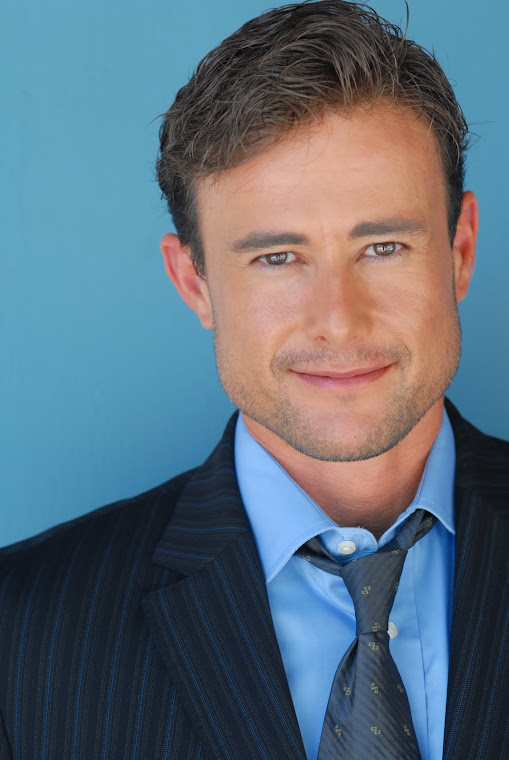
Steven Fales

Steven Fales
Steven Fales -- Actor/Writer/Producer

Thursday, July 10, 2014

Spiritual Abuse/Sex Work Intro to the Book "Confessions of a Mormon Boy"


Introduction to Confessions of a Mormon Boy: Behind the Scenes of the Off-Broadway Hit (Alyson Books, 2006) by Steven Fales (2007 Lambda Literary Award Finalist--Drama).

The book and album "Live from London" is available on Amazon. http://www.amazon.com/Confessions-Mormon-Boy-Behind-off-Broadway/dp/1555839789/ref=sr_1_1?ie=UTF8&qid=1405008705&sr=8-1&keywords=Confessions+of+a+Mormon+Boy


Let’s be honest, folks. Whether you’re gay or straight, there’s a good chance you’ve slept with a Mormon at least once in your life. Or you’ve always wanted to. Or you will! Especially if you live in the Western United States. I think it has to do with that darn smile. Everyone wants to know if Mormons still smile like that when they come. Well, we do! It gives a whole new meaning to the famous Latter-day hymn, “Come, Come Ye Saints.” And to the infamous phrase, “Coming Out!” Governor Schwartzneger once said in an interview, “I feel like I’m coming all the time.” We Mormons feel the same way. Perhaps that’s why we’re always smiling. Okay, maybe we don’t always smile when we come, but at least we often leave our partners grinning! (This obscene paragraph was cut from the book by my publishers, but I just had to put it on this blog! Read on. The next paragraph actually officially begins the intro. Whew!)

According to Mormon mythology, God has smiling, becoming children populating other worlds He has created all over the universe. Mormon founder Joseph Smith once taught that the moon was populated by Mormons. (Not to be confused with the Moonies.) I’ve made it my personal mission to simply meet every gay Mormon on this planet. So far I’m making good progress. (And that doesn’t necessarily mean I’ve slept with them all.) Wherever I perform Confessions of a Mormon Boy, from San Francisco to New York, Chicago to Miami—LGBT Mormons seem to find me—sometimes flying thousands of miles. As long as good upstanding, comely Mormon couples across the galaxy continue having babies, and the Church continues to condemn its homosexual members throughout the universe, there will always be queer Mormons to shake hands with after the show.

            Latter-day Q-Saints are everywhere. We've been around since the Church was founded in 1830. There are thousands upon thousands of us gay Mormons. Statistically, we are approaching a million throughout the world. Our stories are unique and yet the same--we are bonded by our colorful Mormon heritage and traditions, and our diverse sexual orientations and circumstances. We’ve been around since the Church was founded (1830). And I promise we are much more dimensional than anything you’ll see in the recent gay film Latter Days or Angels in America, we give an entirely different spin to HBO's Big Love, and mainstream Mormons aren’t all the fundamentalist freaks you read about in the non-fiction bestseller Under the Banner of Heaven.

            I think I speak for most when I say Mormons are hot! We are pure Americana. It is the consensus in the gay community that there are a disproportionate number of gay Mormons among us. Why? I personally believe that patriarchy breeds us Momosexuals like bunnies. All I have to do is wear a BYU T-shirt into a gay bar, LGBT Center, or Gay Pride event and I’ll leave with three or four (or more!) new best friends for life. I’ve done it many times. Gays make great Mormons. Mormons make great gays. “Oh, the Mormons and the Homos should be friends!”
 
            What is becoming evident to me is that my work doesn't just speak to Mormons or gays. As I’ve written specifically from my queer Mormon point of view, Confessions of a Mormon Boy seems to be landing universally. It plays as well in Salt Lake City as it does in New York, though the themes and humor are sometimes appreciated differently. Salt Lake gets the religious and spiritual nuance of the first half. New York really gets the gritty urban underbelly of the second half. Other cities like Chicago and San Diego and Atlanta seem to get it all. There is apparently something for everyone.
 
            As I greet the audience after every show or read their emails, I get all kinds of comments--from gay, straight, male, female, old, young, religious, non-religious—telling me how much the play means to them. “Did you steal my journals to write this play? I’m Lutheran!” or “You’ve told 99% of my story. I’m Jewish. Or Muslim!” or “I was excommunicated, too, and I’m straight!” or “Except for the escorting part, we have lived parallel lives!” or better yet “I was a sex-worker, too, and I grew up a good Catholic girl!” I’m realizing that this isn’t just my story of reclamation, it is many of our stories.

            What we all seem to have in common is spiritual abuse. I define spiritual abuse as any time an individual or group uses religion to justify telling or showing anyone that they are not worthy of God’s full love and blessings—including basic human rights. My excommunication from the church of my birth for the practice of homosexuality (in the twenty-first century!) is an overt form of spiritual abuse. Nothing would please me more than to see this medieval, barbaric, cult tactic cease and desist in my lifetime. No one should be excommunicated for anything—especially for being gay.
 
            Furthermore, I believe that spiritual abuse in all its insidious forms fuels addiction—as my play very personally illustrates. What do you fill your soul with when God no longer seems to be an option? Where do you turn when you no longer belong to your indigenous community?  At the end of the day, then, Confessions of a Mormon Boy is my contribution to helping end spiritual abuse and religious violence in our churches, mosques, synagogues, and families.

            This play is about many things. But for me, it is about how I first learned to stop being a victim of spiritual abuse—and how I started to reclaim my values and a spirituality that works for me. It’s been said that religion is for people who are afraid to go to hell. Spirituality is for people who have been to hell and don’t want to go back! Religion and spirituality can be two very mutually exclusive things. And, yet, I have to concede that religion can be a spiritual path for many, many people—though it seems to be the exception. Basic spiritual tools belong to everyone. Unfortunately, many religions put their own stamp on spiritual technology (i.e., prayer and meditation, reading inspired literature, gathering in fellowship, service, etc.), claiming theirs is the only way.

It has been rewarding to see men and women who have long abandoned their religion (often out of necessity or survival) leave the show with the possibility of reconciliation with their faith and a renewed commitment to spirituality in their lives—whatever that needs to look like for them. It has also been humbling to meet other recovering sex-workers after the show and hear their stories—and realize just how many of us have taken our spiritual gifts to the streets. (Commercial sex work includes prostitution, escorting, pimping, madaming, pornography, stripping, phone sex, adult cam work, erotic massage, or any other arena where you exchange sex or a sexual activity for money, services, or goods--whether a legal activity or not.) If churches could only get the impact of the loss of talent (and tithing!) they are missing out on by not embracing their LGBT members! (And the part this plays in fueling the rebelliousness of some of us!) I’m not a sociologist, but I’m alarmed as I see how many sex-workers with magnificent spirits grew up with a religious upbringing that one day let them down. There seems to be a connection . . . and some of us never make it back.
 
Some of us choose not to come back.

I would like to further propose that until we get "complete" with our parents, we cannot get complete with God. I think this is particularly true for those of us who grew up in a tribal-clan mentality with an unstated motto like: “If you’re not Mormon, you’re not family.” Or “If you’re not straight, you’re not family.” How I started to get over my anger and issues with my religious dad, in particular, is one of the most important dramatic arcs of the story and brings about the climax of the play. Making peace with my parents (and the spiritual abuse from home) has allowed me to start making peace with God. And it has been quite a homecoming! As it says in the Bible, may "the hearts of the fathers turn to the children, and the hearts of the children turn to their fathers."

No matter who we are, we all have a good victim story and can be held prisoner by that story. When we are in victim-mode, there is only one possibility—being a victim. And choosing victimization is not very sexy. When we become willing to give that up, we have all kinds of choices, our possibilities are endless, and miraculous can occur. We are no longer our circumstances or our past. Who we are is literally Possibility itself. The possibility of being able to love and be loved by God and other.

I call my work “transformational theatre.” My play is a true story of transformation (with elements of recovery) told by the person who lived it. It’s reality theatre and is unabashedly purpose driven. I guess you can take the kid out of the cult, but you can’t take the cult out of the kid! I hope my altruism isn’t a turn-off. It’s a by-product of my zealous up-bringing. I further realize that yesterday’s transformation is today’s ego trip and tomorrow’s relapse. So wish me luck!


Another purpose in writing was to illuminate the dilemma of those struggling to reconcile their dreams of becoming straight with the realities of being gay, and what it costs to accept or deny that truth—especially when children are involved. Some of us good, fundamentalists got married to do the right thing. Many of us loved our straight spouses (as best we could) and were lucky enough to have children. And suddenly, the option of coming out became more and more acceptable. Sadly, many of us have had to choose between our authentic selves and waking up with our dear “spouse-friend” and beloved children in the morning.

After my excommunication and divorce, I was concerned that if I were to die, there wouldn’t be anyone I could fully trust to tell my young kids who I was, what happened, and how much their daddy loved them. So this play was originally written for my children. It seemed a matter of life and death that my innocent children (who are growing up in Utah where it’s debilitatingly shameful on the playground to have a gay dad) hear the complexities of this story in my own words—warts and all. It was my responsibility to tell it. As we are taught to do as Mormons, I have written a non-traditional family history or "Book of Remembrance". I felt it was my duty and responibility as a father and artist to do all I could to leave an accurate record behind to help them make sense of this nearly impossible situation. (As of this writing of the book (not the blog post), my son (11) and my daughter (9) have no seen the show. I have tried to be age-appropriate, but it is for my adult children.)

This is serious personal family business going on before you. History is again repeating itself.  As I mention in my play, my former father-in-law, Gerald Pearson, was a gay Mormon. I never got to meet him as he died of AIDS long before I married his oldest daughter, Emily. But I feel a kindred bond with him. My children are his grandchildren. Unfortunately, he never left a record for any of us, let alone his children. But his ex-wife, Carol Lynn Pearson, told some of his story in her autobiography Good-bye, I Love You (Random House, 1986).

If Gerald had lived, I believe he would have realized the vision Carol Lynn had for him. Even as she cared for him as he lay dying in her home she believed he “would be a light to point better directions to the gay community. And he would be the bridge he had so wanted to be to develop understanding of homosexuals to the larger world. He would take what he had been learning about what love really is and synthesize it into a wonderful message. He would write the things he only had reams of notes on. He would speak and people would listen. Surely that’s what would happen. Surely Gerald would not die with his dreams unfulfilled.” (from Good-bye, I Love You)

Gerald did not die in vain. For me, Good-bye, I Love You has been a template, a validating affirmation, a warning, a self-fulfilling prophecy, a guide, and, at the same time, a second chance. I have come to see this bizarre trans-generational sychronicity as a  beautiful, wonderful, painful, humbling experience--rich in it’s potential for deeper understanding, healing, and forgiveness—and lots and lots of humor. As Confessions of a Mormon Boy has developed across the country, the story has hopefully become less and less about my connection to the extraordinary Pearson family, and more and more about my own spiritual journey.
 
The subject of homosexuality is controversial in and of itself--especially in Mormondom. When you are telling a personal story, when both the general public and your children will read it or see it, homosexuality becomes an even more controversial subject. Some might say what Carol Lynn and I have done is not only shocking but greedy and possibly hurtful, that we've sold our "signs and tokens for money". We have broken taboos. But what we are both guilty of most, if anything, is following our hearts in attempting to make something poetic and positive out of our pain, starting with uncompromising honesty. "We are only as sick as our secrets." And if two generations can't testify to the transformative power of the truth gleaned from real life experience, then I'm giving up and getting re-baptized in the Mormon Church! (Would they take me back now?)

I am well aware that I am guilty of exploiting my family—as guilty as Carol Lynn. Carol Lynn used Gerald’s story to help make her valid feminist points. Her young children were still living at home and Gerald’s ashes were barely cool by the time her memoir was published and anonymity was lost forever. Some would say that we’ve sold our “signs and tokens” for money. I further need to assert on more thing. Carol Lynn Pearson is not gay. It is not really her story to tell, but she does do a good second-hand job. I wrote, because gay fathers need to be the ones to tell our own stories. (This paragraph was not in the original introduction either.)

My ex-wife, Emily, is now writing her confessional. It’s payback time. But if you think Emily and I have a good story—wait ‘til our kids write their book! (If they choose to finish this trilogy.)


After finalizing the script for the Off-Broadway run of Confessions of a Mormon Boy (a process best termed as "distilling"), I found I had stacks and stacks of material left over. Here then, are many of the things I wanted to say on stage, but couldn’t for one reason or another—not the least of which was time. Ninety minutes of me talking about myself without an intermission was the maximum audience bladders—and my director--would allow. I’ve expanded my “comic/dramatic autobiographical monologue mingled with scripture and song” for this book. I think it makes for a more satisfying read. Everything you read here has been performed in one version or another (in a reading or production) as the play developed on its way to an off-Broadway run.

I’ve also included an excerpt from the original Utah version of the play. This more whimsical version served as the world-premiere of the Confessions of a Mormon Boy in Salt Lake City, November 23, 2001. As you will see, it is drastically different in form and tone—but it will always be my favorite. It is my original “funny valentine to Mormonism.” There is also an epilogue, an afterward describing how the play developed, and other extra features and added resources that give more context to the project and my gay Mormon world, including my excommunication letter and production photos.

Everything in Confessions of a Mormon Boy, to the best of my knowledge and recollection—is 99 percent true, with the rest being 100 percent emotionally and poetically honest. I’ve admittedly taken some creative license by recreating a few scenes, embellishing some dialogue for comedic purposes, altering some chronology for dramatic purposes, and compressed a few characters into one. Artistic license has also been taken in portraying certain characters and to preserve the anonymity of others—but all characters are actual people from my life and events that actually happened. And I included Emily and Carol Lynn the process. (They’ve even sold me signed depiction releases!) As we say in Mormondom “I know, with every fiber of my being--that this play is true!”

The one-person show genre does not allow for my entire story to be told. There are so many things to share and expound upon. They will have to wait to be expressed in other ways and at a future time. I hope that I have made the strongest points and that the blanks will be filled in with thoughtfulness, compassion, intelligence, and sensitivity by the reader. As it says in The Book of Mormon, "And now, if there are faults they are the mistakes of men; wherefore, condemn not . . . " In other words, "I cannot write the hundredth part."

I have found sanctuary in the theater—the temple of humanism. In a way, the theater is where I go to commune and worship—often eight shows a week. It’s where, in the words of one of Shakespeare’s greatest human beings, King Lear, “None doth offend.” I hope you enjoy my "Orpheus Descends" love story and my post-post Modern prodigal tale about the humanization of a Mormon boy. I don't think St. Augustine would approve of some of my confessions, but then again, I'm not Catholic!

The Brethren of the Church said I could appeal my excommunication if I wanted to. Instead, I am taking my appeal to the stage and am offering this play as my prayer. And since my Higher Power has a sense of humor--and a touch of sarcasm, too—maybe, just maybe, if we laugh (and cry) enough together, we can laugh me right into heaven. Then the devil will really have something to laugh about!

Blessings, and keep smiling!

Steven Fales
"Transformin' Mormon"
Salt Lake City, Utah, June 2006

Monday, July 7, 2014

Jack Hofsiss Foreward


Foreward to
Confessions of a Mormon Boy:
Behind the Scenes of the
Off-Broadway Hit*
by Jack Hofsiss**


           Anyplace. Two People. One speaks; one listens. Theatre at its most essential. Whether gathering around a campfire to hear those first stories centuries ago or gathering around the electric light of the most modern playhouse, it is theatre.

            These thoughts were on my mind one summer afternoon not too long ago when, at the invitation of a producer, a young actor came to meet me to discuss my directing his play. As we went through the civilities of getting to know each other we discussed how best to talk about this play which I had not seen or read. Organically the actor began to speak the play to me. It was a solo piece, so it easily lent itself to this casual performance. It was anyplace (my living room), there was one person speaking (the storyteller) and one person listening (the audience). Without realizing it we were in the throes of a theatrical performance. This was my first experience of Confessions of a Mormon Boy.

            As I worked with the playwright-actor on it over these last number of years, every production has been an attempt to capture for the audience the experience I had in my living room that day. This ferociously honest tale needs no excessive embellishment to make its powerful points. We all come from some community (religious or otherwise) with which we must make our peace as we gain our own beliefs and value systems. Steven’s struggle to incorporate Mormonism into his life as a gay American is metaphoric for any journey to become whole with your traditions and faith. I have always been particularly struck by the play’s refusal to disparage religion. Instead it speaks toward the inclusion of different sensibilities inside the whole.
 
            This is a tale of faith, this is a tale of tradition, this is a tale of self-identification, this is a tale of love. Come gather around our literary campfire and hear this tale we tell.


*Confessions of a Mormon Boy: Behind the Scenes of the Off-Broadway Hit was written by Steven Fales and published by Alyson Books, Nov. 2006. It was a 2007 Lambda Literary Award Finalist for Drama and has been studied in college and university courses across the country. The book is available on Amazon. http://www.amazon.com/Confessions-Mormon-Boy-Behind-off-Broadway/dp/1555839789/ref=sr_1_1?ie=UTF8&qid=1404776951&sr=8-1&keywords=Confessions+of+a+Mormon+Boy

**Jack Hofsiss is a legendary Broadway director. He received the Tony Award for the original Broadway production of The Elephant Man, the youngest director in history to do so.


Brigham Young, Dahling!


Dahling, did you hear what the great Mormon colonizer king, Brigham Young, ironically said about the theatre? It was quite Victorian, but still impressive considering what a truly bad melodramatic actor I heard he was . . .

“If I were placed on a cannibal island and given the task of civilizing its people, I should straightaway build a theatre for the purpose. Upon the stage of the theatre can be represented in character, evil and its consequences, good and its happy results and rewards; the weaknesses and the follies of man, the magnanimity of virtue and the greatness of truth. The stage can be made to aid the pulpit in impressing upon the minds of a community an enlightened sense of a virtuous life, also a proper horror of the enormity of sin and a just dread of its consequences.  The path of sin with its thorns and pitfalls, its gins and snares can be revealed, and how to shun it.”—Brigham Young
I don't care how you Brigham, just Brigham Young.

Wednesday, January 1, 2014

Press Release MORMON BOY TRILOGY - Richmond Triangle Players


SAM RUDY MEDIA RELATIONS  
For the Arts and Entertainment               
 240 West 44 Street, Penthouse
New York, NY 10036
Phone: 212-575-0263
Fax: 212-575-2240
Samrudy4@cs.com

AWARD-WINNING ACTOR/PLAYWRIGHT 
STEVEN FALES
TO PERFORM 3 PLAYS IN REP FOR FIRST TIME EVER
"MORMON BOY TRILOGY"
set for January 16-February 9
at Richmond Triangle Players
 
Steven Fales – the author and star of the hit solo shows CONFESSIONS OF A MORMON BOY, MISSIONARY POSITION and PRODIGAL DAD – will perform all three plays in rep for the first time ever in a production titled MORMON BOY TRILOGY from January 16 to February 9 at the Richmond Triangle Players in Richmond, VA.  Richmond Triangle Players is one of Virginia’s premiere theatres now in its 21st year.  Tickets are $30 and can be purchased on the RTP Web site at www. rtriangle.org.

Mr. Fales will perform the MORMON BOY TRILOGY – three inspiring, insightful and humorous plays – in Richmond prior to an anticipated run Off-Broadway in New York in fall 2014.  According to Philip Crosby, Managing Director of RTP, it is believed that no solo performer has previously performed three solo plays in repertory – certainly not in a 3-week span.

The TRILOGY consists of three solo plays: 

 CONFESSIONS OF A MORMON BOY had an acclaimed run Off-Broadway in NY in 2006 (Outer Critics Circle Award nomination) directed by Tony winner Jack Hofsiss (THE ELEPHANT MAN), coached by Larry Moss, and was a breakout hit at the 2004 NY International Fringe Festival (Overall Excellence Award).  The play is an examination of the Mormon culture and family life as told by Mr. Fales, a sixth-generation Mormon who wandered into a life of crystal meth in the sex industry, escorting in the penthouses of New York in order to survive, having been excommunicated from the Mormon church after 'reparative therapy' failed to work.  Furthermore, the play depicts Fales' fight to remain in his two children's lives following his divorce from the daughter of Carol Lynn Pearson – the most celebrated author in Mormondom – whose memoir “Goodbye, I Love You” depicted her own experiences when she brought her Mormon ex-husband, afflicted with AIDS, home to die.

CONFESSIONS OF A MORMON BOY has toured across the U.S. and overseas at Edinburgh Fringe Festival, at Charing Cross Theatre in London's West End and elsewhere and has been performed to raise hundreds of thousands of dollars for charity, including a benefit at Lincoln Center for The Point Foundation.  As well, CONFESSIONS won the “Overall Fringe Hit Award” at the Atlantic Fringe Festival in Halifax, Nova Scotia, and received an “Oscar Wilde Award Nomination” from the Dublin International Gay Theatre Festival.  During previous U.S. engagements, the show has chosen as a “Critics Choice” in L.A. Times, Boston Globe, Chicago Tribune and Houston Chronicle.

MISSIONARY POSITION is described as a 'prequel' to MORMON BOY, depicting Mr. Fales' experiences as a Mormon missionary in Portugal and secret Mormon Temple rites.  Fales performed MISSIONARY POSITION at the NYC Fringe 2010 and on national tour.

PRODIGAL DAD, a sequel to CONFESSIONS and the newest of the TRILOGY, relates Steven's discovery of his bipolar disorder, becoming HIV-positive, his custody battles in his home state of Utah, and reclaiming his Greek heritage.

MORMON BOY TRILOGY has been work-shopped at Rising Action Theatre Ft. Lauderdale and The Hudson Theatre in Los Angeles. Each solo play is self-contained and one does not need to see all three to be understood. All three together, however, deliver an epic emotional punch.

Mr. Crosby says, “We are truly ecstatic to have Steven back.  His Confessions of a Mormon Boy blew away our audiences with his honesty and talent last February for Richmond’s Acts of Faith Festival.  We had been waiting for years to get Steven here and he exceeded every expectation we had. When we heard he had a trilogy we said, ‘Can we do it?’ We are thrilled about the entire trilogy going to New York. The messages of the plays are so powerful and deserve to be widely seen. I can’t speak more highly of Steven as an artist and as a person. He’s the real deal. I like to think of the trilogy as being ‘The Mormon Conquests’!”

Fales says, “I feel like I’m still on a mission and my life has been on hold until this trilogy is finished. Doing three shows in repertory is a daunting task, but I feel I’ve been training for this my whole life. For the first time I’ll be adding projection to my storytelling. And I am so happy to work again at RTP. They really know how to treat their artists and I think they are the best theatre in the South—and one of the best in the country.”
 
Steven Fales (actor/writer/producer) was born in Provo, Utah and raised in Las Vegas. He first came to national attention with the off-Broadway production of Confessions of a Mormon Boy at the SoHo Playhouse. The book of the play was a Lambda Literary Award Finalist. He is featured in The Creative Life by Julia Cameron (The Artist’s Way) and the recent anthology Latter-Gay Saints. In addition to his other solo work, Fales has performed in Shakespeare, American Classics and musicals in regional theatres across the country from the Coconut Grove Playhouse to Utah Shakespeare Festival. He has acted in television, commercials, and industrials. He holds a BFA from the Boston Conservatory/Brigham Young University and MFA in acting from University of Connecticut. For more information about Fales including awards, credits, reviews, feature articles, video clips, photos, current projects and more go to www.mormonboylive.com , facebook.com/fales.steven, twitter @mormonboy, or contact fales.steven@gmail.com

RTP recently received 15 Richmond Theatre Critics Circle nominations for 2012-13 season productions, most notably for its productions of La Cage aux Folles and bare: a pop opera.   The Acts of Faith Festival, the largest of its kind in the country, presents theatrical works that open up the discussion of faith and religion.  Richmond Triangle Players has been a leading voice in the Festival, having also produced shows such as Next Fall, The Busy World is Hushed, Visiting Mr. Green, and Carol Lynn Pearson’s Facing East.  For the 2013-14 season, in addition to The Mormon Boy Trilogy, RTP will present Matthew Lombardo’s High as a part of the Festival.

MORMON BOY TRILOGY playing schedule:
CONFESSIONS OF A MORMON  BOY every Thursday at 8 pm; Saturday at 1 pm and Sunday at 7:30 pm
MISSIONARY POSITION every Friday at 8 pm; Saturday at 5 pm and Sunday at 3 pm
PRODIGAL DAD every Saturday at 8 pm
 See all three shows every Saturday, with a special “Marathon Discount”.  See all three shows for $20/per show.  Visit www.rtriangle.org for pricing.

Mr. Fales will also perform his cabaret act MORMON AMERICAN PRINCESS (presented previously at Joe's Pub, Upright Cabaret in L.A.) for one-night only on January 28 at 7:30 pm at Richmond Triangle Players.  Tickets are $20 (or free if patron buys one ticket to the entire TRILOGY).  M.A.P. is described as a “one-man BOOK OF MORMON,” that follows Fales' journey to become a Mormon American Cowboy.  The evening features parodies and music – standards and original songs.

What people are saying about STEVEN FALES:
“A knock-it-out-of-the-ballpark performance. Confronting the ‘demons’ within, and seemingly around him, and ending up such an inspiring example of true self-respect and authenticity left me deeply touched and equally inspired.” — Judith Light
"Steven Fales’s tale of his journey to self-acceptance made me want to jump up in the theatre and holler ‘Amen’!  Mr. Fales is a master at his craft. His work is timely and of utmost importance in these days of religious-based intolerance."— Leslie Jordan
"It was wonderful-- the best gay coming-of-age, grappling-with-being piece I've seen since Dan Butler's, and you know there have been a thousand of them ever since his. It's really good."  — Bruce Vilanch
"Steven Fales has captured the essence of the gay soul.”— John Duran, Mayor of West Hollywood
"When one can be so moved as to laugh till your jaw hurts, wince with a sorry recognition at the pain distorted religion can inflict, cheer with unashamed abandon at an enviable and inspiring bravery so rarely expressed in the face of certain banishment and ridicule, you know you have had a thrilling and emotionally fulfilling theatrical experience. Bravo, Steven Fales and his Mormon Boy!"— Lucie Arnaz
“Steven is a man of passion and integrity and this radiates out of him as he lives his life as a man of faith.  As an ex-Mormon myself, I congratulate Steven for his courage and have no hesitation in recommending him and his story!”— Rev. Neil Thomas, Senior Pastor, MCC LA
“Mormon Boy is a riveting night of theatre. Grounded in the specifics of his own colorful life, it transcends personal revelation by inviting the audience to consider larger issues—the costs of authenticity in a rigid and stratified world. He is a playwright whose work displays great moral courage and daring.”— Julia Cameron, The Artist’s Way
"Steven Fales has taken an archetypal journey through real crucifixion to real resurrection, and he writes about it with great originality, wit, a searing and poignant nakedness, and a knowledge of redemption that will inspire all who come to his work. He is a writer to watch and to learn from."— Andrew Harvey, author Return of the Mother
"If you are interested in human truth expressed with heartbreaking honesty--and great joy and pride--then you do not want to miss Steven Fales."— Doric Wilson, Off-Broadway Legend
"Mormon Boy is an important contribution to the ongoing dialogue about the place of gay men and women in our churches, mosques, and synagogues."— Andrew Brewer, Chairman, Soulforce NYC
"I can’t imagine how many one-man/one-woman shows I’ve seen during my 20 plus years of work in the theatre. Mormon Boy took me somewhere I never could have imagined."— Richard-Jay Alexander, Director
“Steven Fales is funny, moving, bitchy, wise, and brutally honest. Prodigal Dad might even make you wish he was yours.” “--Al Watt, Founder LA Writer’s Lab, The 90-day Novel
“The subject matter of his performances and their powerful presentation manage to mix oil and water: to be at once intensely personal and broadly social, deeply moving and intellectually provocative, serious in content and genuinely entertaining. His tour de force one-man shows elude easy closure, but instead provoke questions that stay with the spectator long after he or she has left the theater.” –Bob Rosen, Dean Emeritus, UCLA School of Theater, Film, and Television
########

Steven Fales (actor/writer/producer) first came to national attention with the off-Broadway production of Confessions of a Mormon Boy at the SoHo Playhouse. The book of the play was a Lambda Literary Award Finalist. In addition to his other solo work, Fales has performed in regional theatres across the country from the Coconut Grove Playhouse to Utah Shakespeare Festival. He has acted in television, commercials, and industrials. He holds an MFA in acting from University of Connecticut. For more information about Fales including awards, credits, reviews, feature articles, video clips, photos, current projects and more go to www.mormonboylive.com , facebook.com/fales.steven, twitter @mormonboy, or contact fales.steven@gmail.com
13
Reviews of Confessions of a Mormon Boy
“An exceptional achievement to rank beside the best of the solo genre.
Wrenchingly honest, hilariously jubilant, and utterly clear-eyed. ”
--Los Angeles Times (Critic’s Choice)
“An astonishing generosity of spirit . . . with fierce comedy and sharp intelligence.
He bares his soul . . . feels like a sacred gift.”
--Boston Globe (Critic’s Choice)
“The stuff of great theatre. Riveting. It’s a strangely intriguing dichotomy . . .
in a sense, he is reliving his own Madonna-whore complex.”
--Associated Press
“Fales’ play is a gripping hybrid of memoir and theater . . . succeeds as non-fiction theater thanks to the writing and acting talent of a true survivor.”
--Connecticut Post
“A triumph! A jolting climax . . . a fascinating turn. Fales knows that the conflict in his life isn’t just homosexuality versus Mormonism. As in all good theater, the protagonist must confront his own shortcomings and overcome them.”
--Newsday
“An uncommonly powerful, gripping, and very moving piece of theatre.”
--Chicago Tribune
“The story couldn’t be more timely. Affecting. Enlightening.”
--San Francisco Chronicle
“A masterful story teller and one hell of a writer. Sexy and harrowing.
A play that transcends religion, gender, and sexuality.”
--San Francisco Examiner
“Fales is such a perceptive writer. As moving as it is funny.”
--New York Daily News
“Compelling confessional theatre. Fales knows how to sell it.”
--New York Times
“Brokeback Mormon . . . a rare blast of lyricism.”
--Variety 14
“Audience-pleasing. Told with much brio. Great material.”
--New York Post
“A quintessentially American once-upon-a-time of sexual identity crisis and selfhood.”
--Village Voice
“His willingness to literally strip away his own defenses will leave you breathless.”
--Metro New York
“Theatrically, comically, and emotionally, this show reaches heights that most off-Broadway productions could only hope to achieve. You will walk out of the theater feeling completely and utterly satisfied.”
--Columbia Daily Spectator
“A tale about finding redemption in honesty.”
--Atlanta Journal-Constitution
“The play is alternately funny and sad—and at its best moments, both . . .
a self-examination about accepting responsibility.”
--The Advocate
“A very funny, poignant, and surprising story of self-acceptance
and the happiness in finding spiritual connections.”
--Las Vegas Review-Journal
“Steven Fales is a hero.”
--Austin Chronicle
“It all leads up to a moment of vulnerability so simple and powerful, it suggests a kind of grace. All is forgiven with his final breathtaking, self-revelatory gesture. Makes you want to say ‘amen.’”
--San Diego Union-Tribune (Critic’s Choice)
“An absorbing tale about the universal human search for belonging.
Gay or not, Mormon or not, it is something we can all relate to. Feels like a sequel to Good-bye, I Love You, from the husband’s perspective and a generation removed. An unflinchingly honest experience.”
--Salt Lake Tribune
“Rare and skillful. Fales’ tumble from grace and his road to redemption peg him as the male counterpart of the fallen woman . . . think Joan Crawford or Bette Davis playing outcasts at their most glamorously vulnerable. Best of all, we don’t see Fales’ ultimate moment of catharsis coming; it hits us between the eyes like a shot with a two-by-four. Fales has lived a stunningly eventful, almost Dickensian life, and he is, by happy coincidence, a fine writer and actor.”
--Chicago Sun-Times 15
“Honest, moving, whimsical, sobering, tender and cathartic.”
--Miami Herald
“The play builds in power until it crests in a warm and satisfying wave that lifts theatergoers to their feet . . . his play shoots skyward in dramatic content and emotional payoff.”
--South Florida Sun-Sentinel
“It’s impossible not to marvel.”
--The Scotsman
“All told with great verve and energy and with very engaging humour.
It is impossible not to warm to this man.”
--ScotsGay (Four Stars)
“Brilliantly acted and beautifully written.”
--Irish Daily Mail
“An incredibly smart play . . . manages to re-invest a predictable story line with boldness, insight, astute political observation and breath-takingly brittle humour and gorgeous one-liners. Confessions is a deeply-felt spiritual phenomena every bit as much as a piece of careful and well-crafted performance.”
--QueerID.com (Dublin, Ireland)
“Fales captivates his audience with a sometimes moving, often funny, and occasionally shocking odyssey from sexual denial to emotional salvation.”
--WhatsOnStage London (Four Stars)
“There’s something here that every gay man can relate to.
And, my, how the boy entertains.”
--London Gay Times (Five Stars)
“Breathtaking. A gripping story. That it’s touching and wise too only adds to the appeal.”
--Entertainment-Focus London
“As American as apple pie. It takes a healthy, open-minded approach to barrier busting.
Its truth is its strong suit.”
--ExtraExtra (London)
“A dynamo show.”
--QX Magazine London (Four Stars)
“A slick one-man show . . . fast, furious, and compelling . . .
An undeniably dramatic story of the self-confessed ‘gayest Mormon on earth.’”
--BOYZ Magazine London (Four Stars) 16
“Mormon Boy is a stunning example of a true emotional journey that is powerful from start to finish.”
--Examiner.com, Denver
“Through this shameless confession, he adorns himself with the powers of self-recognition.
In my world, Steven Fales is a super hero in the gay justice league.”
--MileHighGuy.com, Denver
“Brave, bold, brightly shining masterpiece. One of the most transparent real life plays
I have ever experienced. Unforgettable.”
--Houston Chronicle
“It is the truth-telling that provides the punch and holds the audience in thrall. A talented performer recounts with charm and power a gripping narrative . . .
an emotional, amusing and roller-coaster theatrical ride.”
--Houston Press
“A remarkable piece of theatre. Fales shines. An extremely appealing actor and singer—bold, confrontational, understanding, compassionate. He does not pity himself in the telling of his story. He is funny, winning, shockingly honest, moving and entirely believable.
Confessions is about as intense an experience as you will get in the theatre.”
--The Chronicle Herald, Halifax, Nova Scotia (Canada)
“A polished piece of theatre that knows what notes to hit, but there’s a human heart beneath the slick showbiz veneer. Fales is a whiz-bang actor. His script is gracious to the church that excommunicated him, lampooning spiritual hypocrisy without apparent malice.”
--The Coast, Halifax, Nova Scotia (Canada)
“Fales walks a fine line between satire and truth and ultimately generates a skillful and compelling balance between one-line zingers . . . and life-affirming revelation. It is a testimony to Fales’ skill as a storyteller as well as his ability to find humor in the often painful human condition that holds his audience for 90 uninterrupted minutes.”
--Richmond Times-Dispatch
“Fales is a rare and gifted storyteller who cradles his audience with his words. Even when he is talking about areas of his life that would cause the strongest person to crumble and rail against the world, he brings a smile, holds no grudge, and looks for the divine in his life.”
--Richmond NPR Reviewer, Mondo Johnny


Thursday, June 27, 2013

Daddy Come Back

Fathers are an endangered species. If you are a father who does not see his children on a regular basis for whatever reason, look to the National Parents Organization. (Formerly Fathers and Families.)https://www.nationalparentsorganization.org/

Or read Alec Baldwin's book on Parental Alienation Syndrome, A Promise to Ourselves: A Journey Through Fatherhood and Divorce
 http://www.amazon.com/Promise-Ourselves-Journey-Through-Fatherhood/dp/0312363362

Here's a song I recently wrote for all fathers who are committed to being there for their children against impossible odds. (This is the theme song to my solo play Prodigal Dad, Part Three in The Mormon Boy Trilogy.)

"Daddy Come Back"
Words and music by Steven Fales
(c) 2013 by Steven Fales

Mamma said daddy was bad.
Mamma said daddy was wrong.
Mamma said daddy left us
And that was just the end of the song.
If mamma was always right
How could I ever doubt?
But there's a voice inside me
That won't stop crying out:

Daddy come back
Into my life
Daddy I'm here
And I don't want to fight.
You are the dad I always had
And I always knew that you
Weren't half that bad.
I always knew you'd pull through
And that you're sorry, too.
You are my daddy
And I choose you.

Prodigal kids are all in the news,
Single mommies and housewives, too.
But I know it's not all that it seems to be
Churches and courtrooms don't always see
That I need you as much as you need me
You are my daddy--please choose me.

Do you remember when I was three?
I have a picture of you playin' with me.
There were all those times when you came to school.
You reached out a lot even when mamma was cool.
Well, I've grown up now, dad,
And I'm no one's fool.
I'm standing here--we're off scot free.
You are my daddy--come to me!

Daddy come back
Into my life
Daddy I'm here
And I don't want to fight.
You are the dad I always had
And I always knew that you
Weren't half that bad.
I always knew you'd pull through
And that you're sorry, too.
You are my daddy
And I choose you.

I have a kid. He looks just like you.
I'm sure if you met him you'd be a big fan, too.
I can imagine now how you loved me so.
Life ain't easy so I, I want you to know . . .
I forgive you dad. Because I love you . . .

God and Time
Have a way.
If you don't believe me
Then how can I say--

I'm comin' back
Into their life.
I'm standin' here and
I'm done with the strife.
I am the dad they always had.
And I now I see that we
Aren't half that bad.
I always knew we'd pull through
I am your daddy--and my heart's true.
Just a bruise or two.
But we're good as new.
I'm never leavin' you!

Monday, June 10, 2013

AIDS at 32: For Whom the Bell Tolls (32 Notables Share Their Stories)

AIDS at 32: For Whom the Bell Tolls (32 Notables Share Their Stories)

Here's a recent article I'm honored to be a part of. From Judith Light to Lady Bunny to Greg Louganis we are 32 "notables" chosen by my friend Kergan Edwards-Stout for his article marking the anniversary of AIDS at 32. I have so much more to share on this topic. This theme is covered in "Prodigal Dad", Part Three in The Mormon Boy Trilogy.

http://www.huffingtonpost.com/kergan-edwardsstout/aids-at-32-for-whom-the-bell-tolls-32-notables-share-their-stories_b_3363578.html#slide=2514761


Steven Fales
I never wanted to become positive and tried to avoid it. My father-in-law died of AIDS in 1984. I had a sister-in-law who was positive and who has since died. But a crystal meth binge got me one night. Thank goodness the meds today make it possible to one day see my grandchildren and to be undetectable for the right guy. We're learning

My Liberace/My Menorah

Let me tell you about my personal "Behind the Candelabra." I grew up a faithful Mormon in Las Vegas. When my parents got divorced the shame made me act out--as Liberace. I found these photos of me impersonating the Legend and I had to chuckle. A picture is worth a thousand words, especially when taken in a Mormon meeting house--or ward house. Oh the memories of seminary, volley ball, and all these Las Vegas Mormon. We are a different breed of Mormon for sure.


Here's an excerpt from my book about the experience.

"And for anyone who's still not convinced [I'm gay], I'm famous for the Liberace impersonation I did at a church talent show when I was seventeen. I came out from the wings holding a candelabra, wearing my high school madrigal prince charming costume (I designed it myself, sewed on all the pearls by hand). I had on tights and my mom's full-length chinchilla [actually it was her silver fox]. I played 'Rustles of Spring' [and Claire de Lune!], then swapped "funeral potato" recipes with the Relief Society sisters on the front row. 'Not too much sour cream, Sister Edwards!"

Buy the book on Amazon, Confessions of a Mormon Boy: Behind the Scenes of the Off-Broadway Hit (Lambda Literary Award Finalist): http://www.amazon.com/Confessions-Mormon-Boy-Behind-off-Broadway/dp/B007MXO1H6/ref=sr_1_1?ie=UTF8&qid=1370915352&sr=8-1&keywords=Confessions+of+a+Mormon+Boy+Book

I must say that the candelabra was actually a menorah. My mom's side of the family went to Israel once a year like all good upper-middle class nouveau riche Mormons to loot the Holy Land of all its olive wood figurines and anything made of brass. [Mom's side of the family is now broke! Now just Mormon White Trash with Champagne Taste on a Beer Income.] I grew up in what could have been a Jewish book store on the Upper West Side. I am NOT kidding. It just goes to show that Mormons are wannabe Jews. And so I grabbed the closest "candelabra" I could find for my skit. I hope it's not offensive or disrespectul. I was totally oblivious to what was going on including the irony of playing Liberace.

Later I would live part of Liberace's ex-lover's experiences. Minus the plastic surgery, but enter recovery!

Keep playing the piano and singing no matter what culture you come from! And light a candle for all of us!